For photographers and videographers seeking expansive views, fast apertures, and precise control, a wide angle prime lens is a powerful tool. The following selections cover full-frame and APS-C systems, balancing image quality, compact design, and versatile performance. From ultra-wide astrophotography to architectural detail and cinematic landscape shots, these lenses offer standout sharpness, reliable autofocus, and appealing bokeh at wide angles.
| Product | Brand | Focal Length | Max Aperture | Notes |
|---|---|---|---|---|
| Sony FE 14mm F1.8 GM | Sony | 14mm | F1.8 | Ultra-wide, high-res, excellent for astrophotography and architecture |
| Sony E-mount FE 24mm F1.4 GM | Sony | 24mm | F1.4 | Compact Master wide prime with stunning resolution and smooth bokeh |
| Canon RF16mm F2.8 STM | Canon | 16mm | F2.8 | Ultra-wide fixed focal length with smooth AF for EOS R |
| Sony FE 20mm F1.8 G | Sony | 20mm | F1.8 | Compact ultra-wide with bright aperture and robust build |
| Sony E 11mm F1.8 | Sony | 11mm | F1.8 | APS-C ultra-wide with fast AF and strong corner sharpness |
Below are five highly relevant wide angle prime options, each with official product pages and key features drawn from their listings. The selections emphasize sharpness, fast apertures, and practical handling for both stills and video work.
Sony FE 14mm F1.8 GM — Ultra-Wide Master Quality

The FE 14mm F1.8 GM delivers Sony’s G Master performance with a bright F1.8 aperture for dramatic subject isolation and wide, sharp field coverage. Its design emphasizes corner-to-corner resolution and reduced chromatic aberration, making it ideal for astrophotography, architecture, and expansive landscapes. Two XD linear motors provide fast, precise autofocus, while the internal focusing design supports gimbal setups and compact rigs for handheld or aerial use. The lens balances a compact footprint with high image quality, delivering clean contrast and controlled flare in bright scenes.
Sony E-mount FE 24mm F1.4 GM
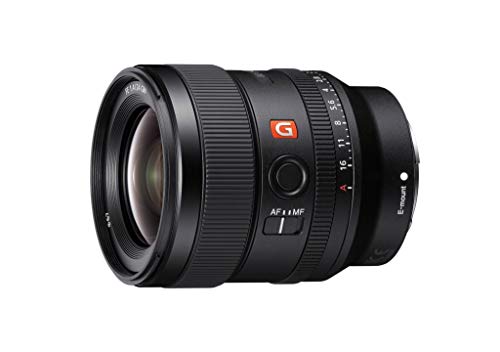
This compact wide prime marries master-level sharpness with a fast F1.4 aperture that delivers exceptional depth of field control and low-light performance. The G Master design is aimed at photographers who demand high resolution with silky bokeh, making it suitable for landscapes, street photography, and environmental portraits. Its performance remains consistent from edge to edge, and it blends well with both full-frame bodies and compact travel rigs that prioritize weight savings.
Canon RF16mm F2.8 STM

Canon’s RF16mm F2.8 STM offers a true ultra-wide perspective in a lightweight package. With a compact form, fixed focal length, and a fast maximum aperture, this lens is well-suited for architectural interiors, travel photography, and immersive landscapes. The STM motor provides smooth and quiet AF ideal for video capture, while the optical design minimizes distortion and flare for clean, natural wide-angle imagery on EOS R-series cameras.
Sony FE 20mm F1.8 G
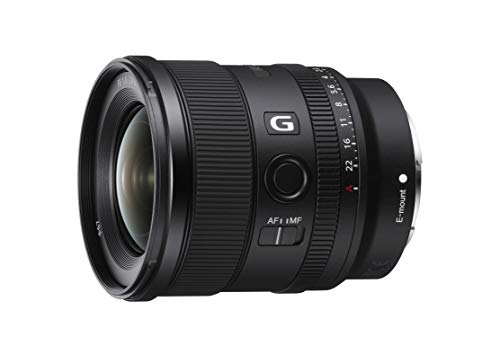
The Sony FE 20mm F1.8 G balances a bright wide angle with a compact, lightweight body. Its F1.8 maximum aperture supports shallow depth of field in landscape, architectural, and low-light scenes, while the flexible focal length offers strong perspective control. The design emphasizes a robust autofocus system and portability, making it a practical choice for fieldwork, travel, and run-and-gun videography.
Sony E 11mm F1.8 (APS-C)
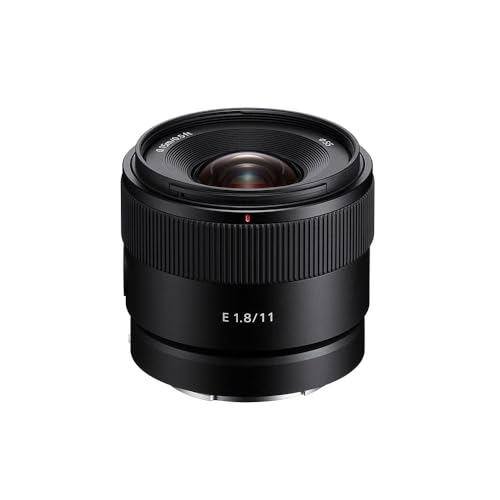
On APS-C bodies, the Sony E 11mm F1.8 delivers an extremely wide field of view with a constant F1.8 aperture and fast, quiet AF. The combination of multiple ED and aspherical elements ensures strong corner-to-corner sharpness and attractive bokeh, while a compact, lightweight build favors handheld shooting and travel. It’s a versatile option for vlogging, landscape previews, and interior photography where space and perspective matter.
Buying Guide
Key considerations when choosing a wide angle prime lens include sensor format compatibility, distortion control, maximum aperture, and autofocus performance. Here are several perspectives to inform your decision:
- Full-frame vs. APS-C: Full-frame lenses provide the widest field of view and edge-to-edge sharpness on compatible bodies. APS-C options like the Sony E 11mm F1.8 offer dramatic perspectives, but must be paired with an APS-C camera to avoid excessive cropping.
- Aperture and low-light performance: Larger apertures (F1.4–F1.8) deliver dramatic subject separation and brighter performance in dim settings, but may demand careful focusing to achieve maximum sharpness across the frame.
- Optical design: Look for lenses with specialized elements (e.g., aspheric, extra-low dispersion, and Nano AR coatings) to minimize aberrations, ghosting, and color fringing at wide angles.
- Autofocus behavior: For video and fast-moving subjects, lenses with fast, quiet autofocus and reliable tracking help maintain sharpness without distracting noise.
- Portability and handling: Ultra-wide primes vary in weight and balance. Consider internal focus designs if you rely on gimbals or compact rigs for travel or on-camera work.
- Build and weather sealing: For outdoor landscapes and astrophotography, a robust build and weather sealing can improve reliability in challenging conditions.
When selecting, compare how each lens handles distortion across the zoom-free field, how its bokeh looks when paired with different aperture settings, and how well it maintains color fidelity against bright or backlit scenes. The right choice depends on your camera system, preferred shooting style, and the environments where you typically work.