Finding the right wall mount camera tripod can simplify home studios, live streams, and security setups. The following selections emphasize versatility, load capacity, and quick adjustments so you can position cameras, lights, and microphones with ease. Each option balances strong construction with flexible articulation, helping you capture the perfect angle whether you are streaming, conferencing, or monitoring a space.
| Product | Brand | Key Benefit |
|---|---|---|
| Elgato Wall Mount – Sturdy Horizontal Articulated Arm | Elgato | Modular rigging with 1/4″ screw versatility |
| RAYWOWO E Shape Adjustable Wall Mount | RAYWOWO | Flexible angle with detachable ball head |
| ULANZI ZJ04 Magic Arm Wall Mount | ULANZI | Long reach, high load capacity |
| ARKON Mounts – Wall Mount Pedestal | ARKON | Wide compatibility and stable wall mounting |
| UYODM 2 Pack Articulating Magic Arm | UYODM | Dual-articulation design for multi-angle views |
Below are five product-focused sections designed to help you compare practical features, mounting options, and adjustability. Each section includes a direct link to the product page, a visual reference, and notes about how the design supports streaming, conferencing, or surveillance needs.
Elgato Wall Mount With Articulated Arm
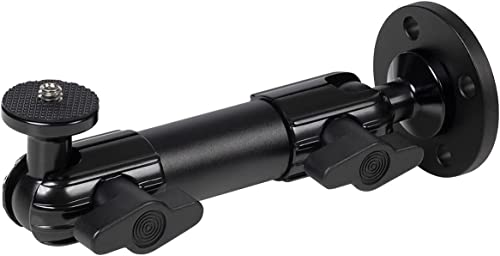
Elgato’s wall mount offers a sturdy, horizontally articulated arm ideal for streaming setups. The design centers on modular rigging capabilities that support additional mounts and accessories, expanding how you configure lighting, cameras, and microphones in a compact space. Its 1/4″ screw compatibility makes it a versatile anchor point for most consumer cameras and accessories. The ball head and ball joint provide smooth, precise adjustment, enabling fast transitions between shots during live sessions. This option suits home studios, small offices, or conference rooms where space efficiency matters most.
RAYWOWO E Shape Adjustable Wall Mount

RAYWOWO emphasizes flexible applications with a broad compatibility range. This mount is designed to work with indoor setups and stick-up configurations for various cameras, monitors, CCTV components, and even speaker arrays. The detachable ball head offers 360° rotation and 90° tilt, improving shot versatility without removing the entire mount. A robust aluminum construct supports devices up to a practical load, providing stability for dynamic recording sessions or security monitoring. The combination of a secure fit and adaptable geometry makes this mount a strong candidate for multi-camera rooms or studios with evolving needs.
ULANZI ZJ04 Magic Arm Wall Mount

ULANZI’s ZJ04 Magic Arm provides an extended reach with a four-section aluminum arm, offering precise control over camera and light placement. At up to 2 kg (about 4.4 lb) load capacity, this arm can support typical compact cameras, small LEDs, and other accessories used in live streams. Its 1/4″ ball head enables flexible orientation for overhead or angled shots, and the aluminum construction contributes to durability in high-use environments. This option is particularly well-suited for overhead lighting or camera positions where distance from the wall improves field of view.
ARKON Mounts – Camera Wall Mount Pedestal
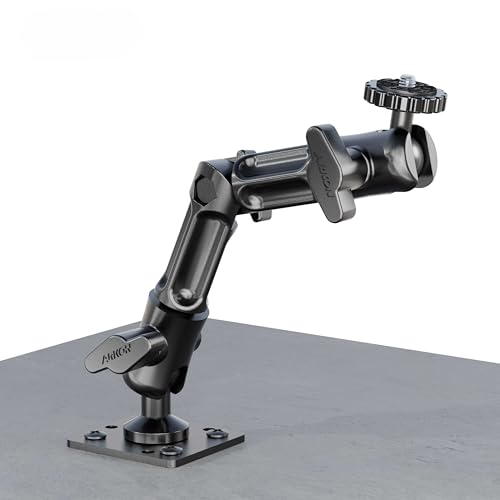
ARKON’s heavy-duty AMPS wall mount is designed for robust security and camera setups. The 4-hole AMPS pattern ensures strong attachment on walls or flat surfaces, and the design accommodates a wide range of brands with the standard 1/4″-20 mounting interface. The combination of sturdy materials and a compact footprint makes it an ideal choice for controlled environments like studios or surveillance corners where discreet, dependable mounting is required. Its ease of installation is a notable benefit for DIY setups or temporary installations in offices or classrooms.
Mippko Articulating Wall Mount Arm

Mippko blends an articulating arm with a 1/4″-20 thread to create a flexible mounting solution for cameras, CCTV POV devices, and small lights. The dual-ball-joint design permits multi-angle adjustment, while the middle elbow joint helps lock orientation into place. With a maximum load around 700 g (about 1.54 lb), it’s best suited for lightweight devices. The metallic, rust-resistant construction suggests resilience in busy environments like streaming setups or security rooms where frequent angle changes are common. Its compact profile helps maintain a tidy, minimalistic installation.
Buying Guide: Key Considerations When Choosing a Wall Mount Tripod
Load capacity and device compatibility: Review the 1/4″-20 mounting standard and ensure the mount supports your device weight. Lightweight cameras, small lights, and compact microphones pair well with arms rated for up to 2 kg (4.4 lb) or more for future-proofing.
Articulation and reach: Consider the number of joints and maximum extension. Overhead or high-angle shots may benefit from longer arms and multiple joints, while tighter spaces require compact designs with smooth rotation.
Material and build quality: Aluminum alloys and robust ball joints reduce wobble and increase longevity in busy environments such as home studios or classrooms. Corrosion resistance and finished surfaces matter for durability and aesthetics.
Installation and mounting pattern: Ensure compatibility with wall surfaces (drywall, concrete, stud spacing) and confirm whether the mount uses standard AMPS or simple 1/4″-20 threads. Simple installation saves time for quick studio setups or temporary configurations.
Modularity and expandability: For streaming rooms or multi-camera rigs, a modular system that accommodates additional arms, mounts, or lighting adapters can simplify future upgrades without replacing the base mount.
Angle versatility: Prioritize mounts offering 360° rotation and 90° tilt where overhead, side, or front-facing angles are needed. Detachable components or quick-release options can improve workflow during shoots or calls.
Security and stability: In security-focused environments, look for sturdy locking mechanisms and stable bases that resist unexpected nudges or vibrations. A rigid mount helps maintain steady framing during long sessions.
Cost versus value: Balance price with build quality and features. A higher upfront cost may yield longer service life and better performance for professional setups.