From half-frame wonders to classic 35mm workhorses, vintage film cameras offer a tangible, tactile path to analog photography. This guide highlights five standout options that pair retro charm with functional gear for today’s shooters. Each model brings distinct quirks, from built-in flash and long-exposure modes to reusable designs and color versatility. Explore practical choices for street photography, portraiture, and creative experimentation, all in a compact, retro package.
| Product | Brand | Type | Notable Feature |
|---|---|---|---|
| KODAK EKTAR H35 Half Frame (Sage) | KODAK | Half-Frame 35mm Camera | Twice as many exposures per roll; built-in flash |
| KODAK EKTAR H35 Half Frame (Sand) | KODAK | Half-Frame 35mm Camera | Twice as many exposures; simple operation |
| KODAK Ultramax 400 Color Film 36 Exp | KODAK | Color Negative Film | Balanced color, easy development |
| RETOCOLOR Glow 400 35mm | RETO | Color Negative Film | Retro color tones, standard ISO 400 |
| Zyyini 35mm Film Camera | Zyyini | Reusable 35mm Camera | Supports black & white or color film, reusable |
KODAK EKTAR H35 Half Frame (Sage)

Distinctive half-frame design doubles the number of exposures per roll, enabling more photos per session without changing film. The EKTAR H35 is lightweight and pocket-friendly, making it ideal for daily carry and casual shoots. Its simple operation suits analog newcomers, while a built-in flash expands shooting options in dim indoor light or outdoors after dark. The camera’s focus-free setup prioritizes quick framing and straightforward exposure, keeping the creative process relaxed and accessible. This model emphasizes film-saving practicality and user-friendly handling for on-the-go photography.
KODAK EKTAR H35 Half Frame (Sand)

This variant mirrors the Sage in design and features, offering the same film-saving capability and easy-to-use ergonomics. The built-in flash adds versatility for day-to-night shooting, while the compact form factor keeps it stealthy and portable. By doubling the number of exposures per roll, it opens opportunities for longer street sessions, photo walks, and travel snapshots without frequent film changes. As a reusable, focus-free camera, it emphasizes simplicity and dependable performance for beginners and seasoned shooters alike.
Kodak Ultramax 400 Color Film 36 Exp (Pack of 3)
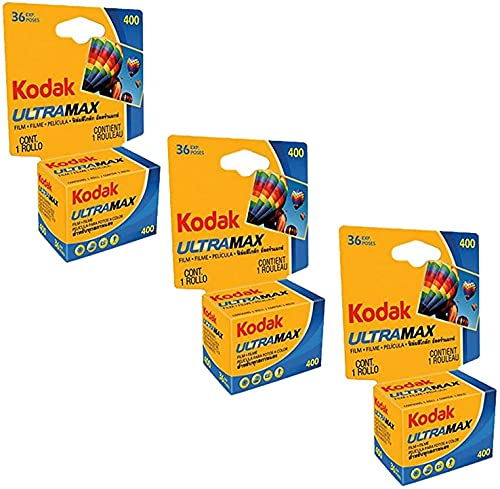
Kodak Ultramax 400 is a versatile color negative film designed for general photography with reliable color rendition and fine grain. The 36-exposure format (108 exposures in a triple pack) suits everyday shoots, family moments, and travel diaries. While not a camera itself, this film is a staple for those who want consistent results across varied lighting conditions. Its compatibility with standard processing makes it a practical choice for shooters who prioritize predictability and convenience in development.
RETOCOLOR Glow 400 35mm

RETOCOLOR Glow 400 offers classic ISO 400 color negative film with 27 exposures per roll. The film’s C-41 processing is widely supported, easing development workflows for hobbyists and enthusiasts. Its retro color palette provides nostalgic tones that suit portraiture, street scenes, and vibrant cityscapes. The ISO 400 rating performs well in a range of lighting, from daylight to shaded environments. This option emphasizes versatility and approachable color reproduction suitable for experimenting with film aesthetics.
Zyyini 35mm Film Camera

The Zyyini 35mm camera emphasizes reuse with compatibility for standard 35mm film stock, including black-and-white or color options. The camera supports humanistic photography, encouraging storytelling through tangible prints. Its reusable design makes it an economical choice for ongoing experimentation with development techniques and lighting. The device’s straightforward controls and film compatibility appeal to photographers who value a simple, iterative approach to analog work, whether indoors or outdoors.
Buying Guide
Key considerations when selecting a vintage 35mm option include film format, exposure capacity, handling comfort, and future-proofing for ongoing play with analog shooting.
- Host camera type: Half-frame cameras yield more exposures per roll, increasing shooting sessions but offering smaller image sizes. Full-frame 35mm bodies often provide a more traditional framing experience and broader lens options.
- Exposure and film handling: Look for models with simple, reliable operation (focus-free or fixed-focus) if you want quick framing. For creative control, consider lenses and exposure features, such as long-exposure modes or bulb settings.
- Built-in features: A built-in flash broadens usability in low light, while star filters or coated lenses can influence image aesthetics and glow in night scenes.
- Film availability and processing: Ensure you can source compatible film stock (color or black-and-white) and access development services that handle C-41 or standard processing.
- Cost and maintenance: Classic cameras may require occasional battery checks or minor repairs. Reusable designs can offer cost savings over time but may need more frequent upkeep.
- Portability and ergonomics: Compact, lightweight builds suit street photography and travel. Consider grip, button layout, and weight for all-day shooting comfort.
- Compatibility with film types: Some models are optimized for specific film formats or exposure counts. Verify that your preferred film stock aligns with the camera’s design.
These options showcase a spectrum of vintage 35mm approaches—from half-frame portability and built-in illumination to color film versatility and reusable design. Selecting among them depends on how you plan to shoot: casual urban explorations, studio portrait experiments, or outdoor travel diaries. Each choice preserves film’s tactile quality while enabling creative exploration in a modern context.