Good astrophotography with a DSLR blends precise mounts, capable optics, and compatible imaging gear. This guide highlights five popular products that help enthusiasts capture the night sky, from portable tracking mounts to robust refractors and entry-level cameras. Each item is chosen for its balance of performance, ease of use, and compatibility with DSLR workflows. Explore how these tools fit into a beginner-to-intermediate setup and what they offer for long-exposure, wide-field, and planetary imaging.
Summary of chosen products:
| Product | Brand | Key Use | Why It Matters |
|---|---|---|---|
| SV105 Telescope Camera | SVBONY | Astro images with a dedicated eyepiece camera | Beginner-friendly entry into planetary and lunar imaging; real-time viewing |
| Star Adventurer 2i Pro Pack | Sky-Watcher | Portable tracking for wide-field shots | Wi‑Fi control, ideal for Milky Way and time-lapse |
| SV48P Refractor OTA | SVBONY | Deep-space and visual astronomy | Good light collection and smooth focusing for beginners |
| MEEZAA 150EQ Reflector | MEEZAA | Deep-sky imaging and moon | Large aperture with upgraded equatorial mount for tracking |
| National Geographic 114mm Reflector | Explore Scientific | Smart start for astro-imaging with smartphone | Smartphone adapter enables simple astro-photography |
SVBONY SV105 Telescope Camera for Astro Imaging
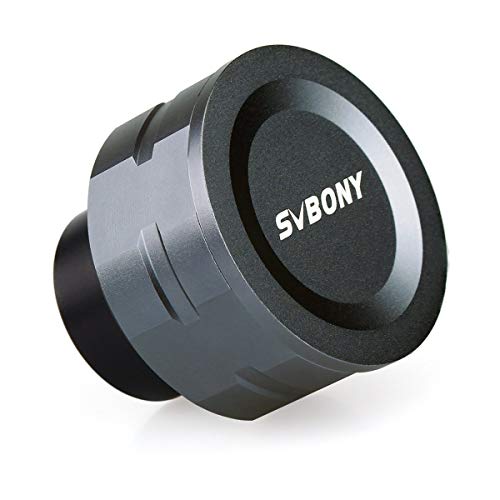
The SV105 is designed as a straightforward entry point for astrophotography. This 1.25″ CMOS eyepiece camera is ideal for beginners who want to start imaging the Moon and bright planets. It supports real-time video capture and can connect to a laptop for live viewing. The camera is plug-and-play on Windows, with optional software on Linux and Android versions. This ease of use helps new users transition from visual observing to basic astrophotography without a steep learning curve.
Key features include a USB-based workflow, real-time dynamic observation, and compatibility with common capture software such as Sharpcap on Windows and AstroDMx on Linux. This makes it a practical choice for first-time astrophotographers who want immediate feedback and simple setup.
Sky-Watcher Star Adventurer 2i Pro Pack
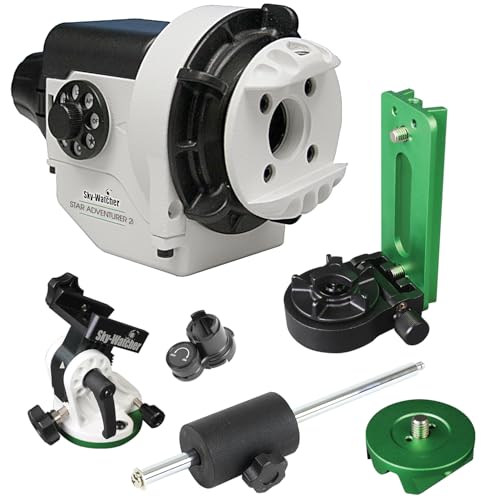
The Star Adventurer 2i Pro Pack is a portable, motorized tracking platform designed for wide-field night-sky photography and time-lapse sequences. Its modular design allows mounting on standard tripods, enabling the capture of Milky Way core shots, eclipses, and deep-sky subjects with enhanced tracking accuracy. The 2i edition introduces Wi‑Fi control, letting you operate the mount via Sky-Watcher’s SAM Console app for convenient smartphone-based adjustments. This combination of portability and smart control makes it a compelling choice for astro-landscape shooters and field setups.
With a reliable tracking solution, you can achieve longer exposures without star trails, expanding the kinds of images you can capture with a DSLR or mirrorless camera. The Star Adventurer 2i Pro Pack fits well into travel photography workflows as a compact astro-tracker for wide-field imaging.
Unalace 64GB Digital Eyepiece with 2K Video

This digital eyepiece camera provides a compact way to observe and capture live 2K video and stills. The device supports 25–50 mm eyepieces and can connect via built-in WiFi for remote control through a mobile app. It includes a time-lapse and live-view functionality, making it suitable for beginners who want to document planetary events or lunar transits without carrying heavy camera bodies. Its ease of installation and universal fit helps streamline entry-level astrophotography sessions.
Consider the trade-offs: while the Unalace unit offers acceleration of workflow via WiFi and a built-in viewing screen, it is primarily an accessory for quick captures rather than a full imaging rig. It works well as a companion to a tracking mount or telescope for monitoring and capturing short sequences.
SVBONY SV48P 90mm Refractor OTA

The SV48P offers a 90 mm aperture with a 500 mm focal length, delivering a brighter image and a wider field of view than smaller refractors. It’s a solid option for beginners who want to begin with deep-sky targets and the Moon. The telescope features a double-speed 2-inches focuser with a 1:10 gear ratio, enabling precise focusing and smoother tracking. A sturdy metal interface helps maintain optical alignment, which is critical for consistent results when capturing long exposures with a DSLR or dedicated astrophotography camera.
For DSLR astrophotography, the SV48P provides a balance of light collection and ease of use. It supports visually guided observations and can serve as a reliable platform for learning star alignment, focusing, and tracking fundamentals before moving to more advanced equipment.
MEEZAA 150EQ Reflector Telescope

The MEEZAA 150EQ combines a 150 mm aperture with a 650 mm focal length, yielding strong light-gathering power for deep-sky viewing and photography. Included eyepieces (25 mm and 10 mm) and a 2X Barlow lens offer flexibility for magnification, while a red-dot finder helps with object location. The upgraded German equatorial mount uses slow-motion cables for precise tracking, making it easier to acquire and follow celestial targets. The design supports extended viewing sessions and time-lapse sequences, which are common in DSLR astrophotography workflows.
This setup is well-suited for beginners stepping into longer-exposure imaging and for those who want a capable balance of aperture, accuracy, and portability. The combination of a large aperture and a user-friendly mount helps you practice target chasing and framing across multiple night sessions.
National Geographic 114mm Reflector for Beginner Astrophotography
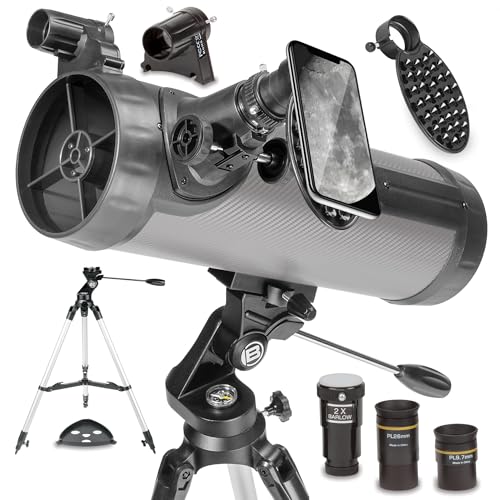
The 114 mm reflector represents an approachable path into DSLR astrophotography with a built-in smartphone adapter for quick imaging. Its 500 mm focal length, paired with two eyepieces, enables moderate magnification for observing and capturing the Moon, planets, and brighter deep-sky objects. The simple smartphone adapter helps you take first steps in astro-imaging by merging a conventional telescope with mobile photography. This is a practical starter system for households who want to experiment with imaging without heavy or complex equipment.
Considerations for DSLR workflows include balancing focal length with tracking stability and learning how to align, focus, and capture exposures that maximize signal while minimizing noise. This telescope is a convenient way to explore astrophotography concepts before upgrading to motorized mounts or larger apertures.
Buying Guide: Key Purchase Considerations for DSLR Astrophotography
- Mount and tracking: A stable mount with accurate tracking is essential for long exposures. Portable trackers paired with DSLRs are great for wide-field imaging, while equatorial mounts help with precise tracking of deep-sky objects.
- Aperture and focal length: Larger apertures gather more light, enabling fainter targets. Balance aperture with focal length to achieve usable fields of view for your target set (Moon, planets, deep-sky).
- Imaging vs. observing: Separate equipment may be optimized for live viewing (eyepiece cameras) and for long-exposure imaging (DSLR/astronomical cameras). Consider a modular approach to upgrade paths.
- Ease of use: Entry-level cameras and simple smartphone adapters reduce setup time and allow you to practice basics like focusing, framing, and exposure planning.
- Software compatibility: Ensure your capture and processing tools (e.g., Sharpcap, AstroDMx, or camera-native apps) support your hardware and operating system.
- Portability and transport: If you travel for dark-sky sites, prioritize lightweight, compact gear with reliable power options and straightforward assembly.
- Future upgrades: Choose components that can scale with your skills, such as upgrading to a motorized mount or a larger aperture telescope as you grow.
- Target planning: For DSLR astrophotography, plan based on your location, night sky conditions, and the season to maximize visibility of planets, the Milky Way, or nebulae.
In practice, a smart approach is to pair a portable tracking mount (like the Star Adventurer 2i) with a modest refractor or reflector and a compact imaging camera or DSLR adapter. This lets you learn essential skills—framing, focus, exposure, and stacking—before investing in heavier, more specialized equipment. For planetary and lunar targets, a dedicated camera like the SV105 can provide immediate live feedback, while for wide-field Milky Way images, a stable tracker paired with a DSLR yields strong results. Each product above offers a pathway to building a capable DSLR astrophotography setup with different levels of complexity and portability.