When shooting on a tabletop, a reliable table tripod can make the difference between blurred frames and sharp, professional-looking video or photos. The following five desk-ready tripods offer solid stability, flexible height options, and quick setup for cameras, smartphones, and action cams. Each option supports a range of devices and contexts—from macro close-ups to overhead shots—while fitting neatly on a desk, shelf, or studio workspace. The list prioritizes build quality, versatility, and ease of use to help you pick the best table tripod for your camera needs.
| Product | Load Capacity | Key Benefit |
|---|---|---|
| NEEWER Portable Desktop Mini Tripod | Up to 11 lb / 5 kg | Compact yet sturdy with 360° ball head |
| Zeadio Heavy Duty Mini Metal Tripod Stand | Up to 40 kg / 88 lb | Extreme stability for pro gear and gimbals |
| Webcam Tripod Stand Extendable Desktops USB | Up to 1.5 kg / 3.2 lb | Lightweight and foldable for streaming setups |
| NEEWER Mini Metal Table Tripod (TP29) | Up to 3 kg | Versatile use as table tripod or grip handle |
| SmallRig VT-20 Aluminum Mini Tripod | Up to 6 kg | Compact, adjustable height with multiple angles |
NEEWER Portable Desktop Mini Tripod Aluminum Alloy 20”

The NEEWER desktop tripod combines a durable aluminum alloy build with practical height adjustability, designed for macro shots and close-range video work. Its 5-section legs extend from about 6.7 inches to 19.7 inches, giving you flexible options for low-angle overheads or compact desk setups. The 360° swivel ball head enables panoramic framing and precise composition, while the Arca-type quick release plate speeds up transitions between shoots. A bubble level helps maintain accuracy across surfaces, making it ideal for tabletop vlogs, product photography, and macro work where stability matters.
With a load rating of up to 5 kilograms (11 pounds), this model supports DSLRs and compact camcorders, plus small action cams when paired with the 1/4″ screw standard. The combination of sturdy construction and a compact footprint makes it a strong choice for desktop studios, hotel workspaces, or any scenario where a stable, portable tripod is required. Users should ensure the center of gravity remains balanced with heavier bodies to avoid tipping on slick surfaces.
Zeadio Heavy Duty Mini Metal Tripod Stand

Designed for maximum stability, the Zeadio heavy-duty mini metal tripod delivers a robust CNC-machined aluminum alloy construction capable of supporting substantial gear without flex or wobble. Its universal 1/4″ screw compatibility makes it a versatile solution for cameras, gimbals, smartphones, and various accessories. A flexible height range lets you shoot from low angles, tabletop perspectives, or elevated positions on uneven surfaces. The solid metal build pays off in professional environments where camera shake must be minimized during long sessions.
This model is especially suited for heavier cameras or when pairing with gimbals and stabilizers. The compact footprint and high load capacity translate into dependable performance on set, in the field, or as a compact studio solution. While it is more substantial than typical desk tripods, it remains portable enough for travel and on-location shoots, offering reliable support for precise framing and camera stability.
Webcam Tripod Stand Extendable Desktops Tripod
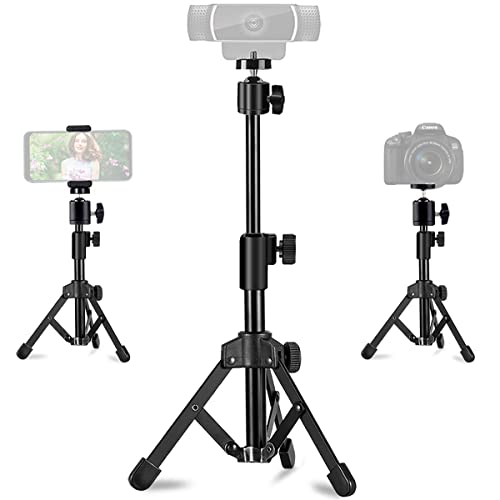
This desk-height tripod is designed for webcams, laptops, phones, and compact cameras. It features two height levels, extending from 11.5 inches to 18 inches, with a ball-joint head that enables 360° rotation and up to 90° tilt. The construction prioritizes stability with non-slip rubber pads to guard against bouncing or tipping during streaming or casual filming. While it supports lighter devices, the compact design makes it a practical choice for quick setup and portability in home studios, classrooms, or conference rooms.
With a maximum load around 1.5 kg (3.2 lb), it’s best suited for lightweight cameras and accessories, such as compact mirrorless bodies, action cams, or smartphones mounted with appropriate adapters. The lightweight build makes it easy to move between desks or carry for travel. While not intended for heavy DSLRs, it excels in applications that require speed, simplicity, and a tidy desk footprint.
NEEWER Mini Metal Table Tripod TP29

The TP29 model from NEEWER adds versatility to desk work with a metal build and a 1/4″ screw interface for multiple devices, including cameras, phones, and action cams. Its compact design doubles as a handheld grip or a support when needed, letting users switch quickly between tripod and grip modes during a shoot. The tripod emphasizes stability with a solid base and a secure locking mechanism, while foldable legs make it easy to stow away when space is limited.
The included features support overhead and close-up work, thanks to a design that accommodates vertical shooting and low-angle perspectives. The base’s non-slip feet help maintain stability on smooth desks and studio floors alike. This option is particularly attractive for users who value portability without sacrificing rigidity and user-friendly adjustments.
SmallRig VT-20 Aluminum Mini Tripod
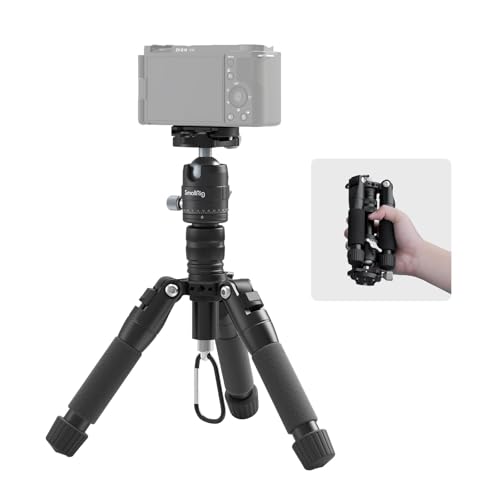
The SmallRig VT-20 combines compact dimensions with a sturdy aluminum build and a 360° ball head, explicitly designed for DSLR cameras, mirrorless rigs, smartphones, and action cams. With a maximum load of 6 kg, it accommodates a broad range of devices while remaining travel-friendly. The legs fold for storage, and the center column can be adjusted to achieve low-angle or overhead setups. Three angle options for legs improve shooting flexibility, and the quick-tightening mechanism speeds up height adjustments.
This Mini Tripod strikes a balance between portability and stability, making it a strong pick for travel videographers and on-site product shoots. Its light weight and compact form do not compromise the ability to lock devices firmly in place, which is essential during longer shoots or when using heavier camera bodies.
Buying Guide: Key Considerations For Choosing A Tabletop Tripod
When selecting a table tripod for cameras, several factors determine which model best fits your use case. Consider build quality, load capacity, height range, and compatibility with your gear. If you frequently shoot overhead or macro work, a ball head with smooth rotation and a stable locking mechanism becomes critical. For streaming or desk setups, a lighter, foldable unit with simple adjustments can save time and space. If you own heavier gear or plan to use a gimbal, prioritize a model rated for higher loads and sturdy materials like CNC-machined aluminum. Portability and quick-release compatibility are also important for efficient workflows.
Here are a few angles to compare across options:
– Stability vs. Weight: Heavier metal tripods offer better steadiness, especially on slick surfaces, but weigh more to carry or reposition.
– Height Versatility: Look for multiple section legs and a wide height range to cover low, mid, and high angles.
– Compatibility: Ensure standard 1/4″-20 screw threads fit your camera, gimbals, and accessories, and consider Arca-Swiss or universal plates for quick changes.
– Versatility Features: Some models convert to handheld grips, lie flat for macro overhead shots, or include a cold shoe for mics or lights.
– Surface Suitability: If you work on uneven floors or soft desks, non-slip feet or rubberized bases help prevent wobble.
In summary, the right table tripod should match your device weight, the shooting style you pursue (overhead, macro, portrait, or streaming), and the workspace where you typically operate. The five selections above provide a range of capacities and configurations to support diverse American camera workflows—from compact desk studios to heavier tabletop rigs.