Finding a reliable remote shutter can dramatically reduce camera shake, enable long exposure shots, and make self-portraits or wildlife photography easier. This guide reviews top-rated remote controls compatible with a wide range of Canon, Nikon, Fujifilm, Sony, Panasonic, and more. Each option balances wireless range, ease of use, and compatibility, helping you select a model that fits your rig and shooting style.
| Product | Brand | Key Compatibility | Approx. Range |
|---|---|---|---|
| AODELAN Wireless Shutter | AODELAN | Canon EOS RP, R6, multiple Canon and more; Fujifilm X-T3 | Up to 164 ft |
| Canon BR-E1 | Canon | Bluetooth-enabled Canon cameras | About 16 ft |
| PROfezzion Canon Remote | PROfezzion | Canon EOS Rebel series to EOS R, RP, and more | Up to 50 m (164 ft) |
| CamKix Wireless IR Remote | CamKix | Nikon and Canon compatible cameras | Up to 16 ft |
| JJC Radio Wireless Remote | JJC | Canon, Nikon, R-series and more | Up to 100 ft |
AODELAN Wireless Shutter Remote for Canon and More

The AODELAN wireless remote provides broad compatibility with Canon models including EOS RP, R6, 5D series, 6D II, 7D II, and many older bodies. It supports both wireless triggering and wired operation via a receiver, and requires two AAA batteries for the receiver and a CR2032 for the transmitter. This model is designed for photographers who shoot a wide variety of Canon bodies, making it a robust choice for mixed gear setups.
Canon Wireless Remote Control BR-E1

The Canon BR-E1 uses Bluetooth to wirelessly control focusing, still photography, and video with compatible cameras. It supports zoom control via the Power Zoom Adapter PZ-E1 and offers a practical 16-foot operating distance. Ideal for Canon shooters looking for a compact, Bluetooth-based remote without extra receivers or wires.
PROfezzion Wireless Remote Control For Canon

The PROfezzion remote supports a broad Canon lineup from Rebels to R-series, including 90D/80D/70D and many others. It features 2.4GHz wireless communication with 16 channels, offering up to 50m (164 ft) range depending on conditions. A three-part kit (transmitter, receiver, cable) enables flexible positioning and reliable triggering in various shooting environments.
CamKix Wireless IR Shutter Remote

The CamKix remote provides wireless control for Canon and Nikon cameras with infrared signaling. It supports quick-response, delayed, and bulb modes, with a practical 16-foot range. Easy to operate after simple pairing, this option is ideal for beginners or those who prefer an IR-based remote for stationary setups or studio work.
JJC Radio Wireless Remote Control Shutter
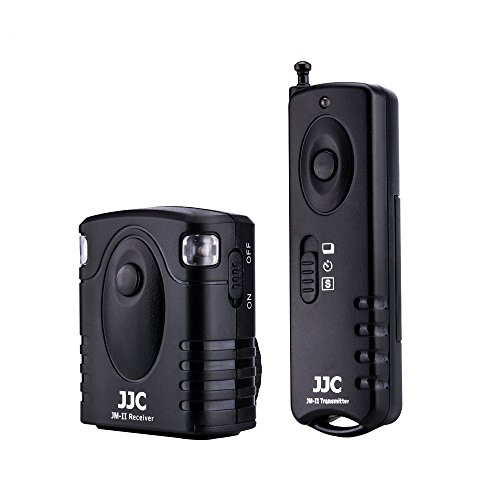
The JJC remote uses 433 MHz radio frequency with up to 30 meters (100 feet) range and 16 channels. It can trigger cameras wirelessly or via a connected cable and offers a flexible approach for use behind or in front of the camera. This kit is suitable for photographers who need non-line-of-sight operation and multi-receiver setups.
Buying Guide
Key considerations when choosing a remote shutter include compatibility, range, and control type. If you shoot across multiple brands, a cross-brand option like 2.4GHz or radio-based remotes can simplify gear management. For studio work or macro shots, a wired or hybrid transmitter-receiver setup can provide more stable triggering and eliminate battery concerns on the camera body.
- Compatibility: Check your camera’s exact model and whether you need infrared, Bluetooth, or radio frequency triggering. Some remotes support older DSLR bodies, while others target modern mirrorless or hybrid cameras.
- Range: Wireless range varies from about 16 feet for IR remotes to 100 feet or more for radio-based devices. Consider whether you’ll shoot from a distance, in bright sunlight, or in crowded venues.
- Power: Review battery requirements (AAA, CR2032, rechargeable) and whether the batteries are included or sold separately.
- Modes: Delayed shutter, bulb mode, and continuous shooting options expand the range of possible shots. Confirm support for the modes you plan to use.
- Reliability: For long exposures or time-lapse work, prioritize units with stable connections and minimal lag. A good warranty or replacement policy is also beneficial.
- Form factor: A compact, clip-on transmitter and a small receiver are ideal for travel, while a larger kit may include a tripod clip or strap for field use.
Additional Comparisons
IR remotes tend to be affordable and simple, but require line-of-sight and can be disrupted by obstacles. Bluetooth remotes remove line-of-sight needs but may have shorter battery life or pairing quirks. Radio-frequency remotes offer the best flexibility for studio or outdoor use, especially when the camera is placed behind props or in difficult-to-reach spots.
Usage Scenarios
Portraits and self-portraits benefit from a remote to reduce shake and enable remote posing. Landscape photographers can capture long exposures or star-trail sequences with confidence. Event shooters may rely on remotes for discreet shooting to avoid camera shake in quiet environments. For macro work, precise timing helps with focus stacking and controlled illumination.
Final Notes
Choosing the right remote shutter involves balancing brand compatibility, range, and shot requirements. The models covered here cover a spectrum of needs—from broad Canon support with AODELAN and PROfezzion to compact Bluetooth options like Canon BR-E1 and practical IR issuances from CamKix. Consider your primary cameras, shooting style, and travel needs when selecting a remote shutter for DSLR or mirrorless setups.