Choosing a professional studio stand involves balancing load capacity, height range, maneuverability, and footprint. This article highlights five top options designed for serious photography and video work in controlled spaces. Each pick supports DSLR and mirrorless cameras, lights, or monitors, and offers features aimed at maximizing stability, reach, and safety in busy studios.
The following quick table summarizes the five selected products, including their primary strength and intended use:
| Product | Main Strength | Best For | Height Range | |
|---|---|---|---|---|
| IFOOTAGE A400 Round Base Monopod | Space-saving round base | Crowded studios and tight spaces | Under 79″ (adjustable) | Monopod versatility |
| Lusweimi Heavy Duty Light Stand | Two grips and broad load capacity | High-capacity lighting setups | 2 ft to 8.5 ft | Stable, adjustable height |
| NEEWER Heavy Duty Light Stand with Casters | 360° casters for mobility | Mobile studio layouts | 4.3 ft to 10 ft | Strong, wheeled versatility |
| NEEWER Basics 100% Stainless Steel C Stand with Boom | Sturdy C stand with boom | Heavy lighting and overhead rigs | 4.7 ft to 10.5 ft | Boom-ready support |
| Freesea Aluminum Light Stand | Lightweight aluminum with good adjustability | Travel-ready studio setups | 2 ft to 8.5 ft | Compact and robust |
IFOOTAGE A400 Round Base Monopod Review

The IFOOTAGE A400 Round Base Monopod emphasizes space efficiency. Its flat, round base minimizes floor space and reduces trip hazards, an important consideration in crowded studios. The 5mm aluminum chassis provides strength while allowing the head to sit close to work surfaces, enabling ultra-close subject positioning. This monopod supports up to 22 pounds (10 kg), making it suitable for many DSLR and mirrorless configurations, lightweight lighting fixtures, or small projectors. A universal 3/8″ screw and light adapter expand compatibility with cameras, microphones, and other accessories, enabling quick reconfigurations between shoots without a full tripod setup.
Practical in tight rooms or on cramped sets, the A400’s round base reduces footprint and increases overhead clearance for top-down lighting or macro work. Its compact footprint also helps in live streaming or vlogging scenarios where mobility and speed are essential. While it may not replace a full-height tripod for heavy rigs, it delivers reliable support for compact, high-mobility shoots where space is at a premium.
Lusweimi Heavy Duty Light Stand With Casters

The Lusweimi light stand combines durability with mobility. Made from sturdy steel, it supports up to 66 pounds, making it suitable for heavier lights, softboxes, or reflectors. Its height range extends from 2 feet to 8.5 feet, offering flexibility for overhead lighting, table-top shoots, or vertical rim lighting. The dual grips simplify handling and adjustment while providing secure operation during mobile shoots. This stand’s casters allow easy repositioning on set, and the integrated stability helps prevent tipping when heavier gear is mounted. The compatibility with multiple screw sizes (1/4″, 3/8″, and 5/8″ Pin Stud) broadens accessory options for cameras, heads, or tooling.
For studio workflows that demand frequent repositioning, the Lusweimi stand reduces downtime between scenes. It is a strong choice for interview setups, product videos, or small studio corners where a large tripods’ footprint would be prohibitive. Its robust construction helps maintain stability in varying floor textures, including wood or concrete, which is common in rental studios.
NEewer Heavy Duty Light Stand With Casters (Max 10 ft)
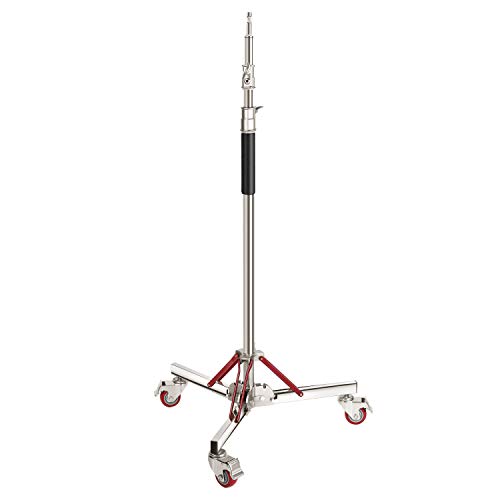
The Neewer Heavy Duty Light Stand with Casters emphasizes mobility and load-bearing performance. The 360° casters enable smooth rolling across studio floors, with brakes to lock the stand in place during shoots. The stand extends from about 4.3 feet to 10 feet, offering tall reach for overhead lighting, backlighting, or high-angle setups. Built from stainless steel for durability and corrosion resistance, it handles a wide variety of environments—from climate-controlled studios to on-location shoots. A load capacity around 66 pounds ensures compatibility with a broad range of monolights, softboxes, and reflectors, while its fold-down design supports efficient transport.
Motion-friendly designs like this are advantageous in multi-station studios, where lighting rigs must be moved between scenes quickly. This model balances strength with practical transport, making it a solid choice for event spaces, portrait studios, and educational facilities where quick reconfiguration matters.
NEewer Basics C Stand With Boom Arm

The NEWER Basics C Stand with Boom Arm focuses on heavy-duty support for overhead lighting and large modifiers. Constructed from 100% stainless steel, it emphasizes reliability and rust resistance in studio and outdoor environments. The included boom arm provides extended reach for light modifiers like octaboxes or large reflectors, enabling dynamic lighting angles. The center column supports substantial weight, and the overall design remains stable under load—crucial when mounting heavier lighting kits or backdrops. It is designed for long-duration shoots where stability and repeatable positioning are essential.
This stand excels in configurations that require overhead rigs or elevated accents. The stainless steel build resists wear and weather, making it suitable for on-location work as well as fixed studio rigs. The combination of a solid turtle base and a robust column makes it a versatile anchor point for complex lighting arrays.
Freesea Light Stand Aluminum For Studio and Travel

The Freesea aluminum stand offers a travel-friendly solution without sacrificing sturdiness. Its lightweight aluminum construction keeps weight down while delivering a solid 260 cm maximum height. The stand is designed for versatile studio setups, including speedlites, strobes, and small softboxes. A telescoping column and reversible legs allow for stable mounting on varied surfaces, including uneven terrain common in field shoots. When packed into a bag or carrying case, this stand remains compact and easy to transport between locations, making it suitable for freelancers, videographers, or small production crews on the go.
In practice, Freesea stands provide dependable support for mid-weight lighting gear, with a focus on portability. Users benefit from a combination of adjustable height, robust construction, and a compact form factor that fits neatly into smaller studio spaces or travel rigs. This makes it a practical choice for creators who switch between locations frequently or require quick setup times.
Buying Guide: Key Purchase Considerations For Studio Stands
When selecting a professional studio stand, consider these core factors to align equipment with your shooting style and workspace:
- Load capacity: Verify the maximum weight each stand can support. Match this to your heaviest lighting, modifiers, or camera rigs you plan to mount.
- Height range: Ensure the stand offers enough minimum and maximum height for your typical shots, whether overhead lighting, low-angle product shots, or high-ceiling interview setups.
- Mobility vs stability: Casters and wheels increase on-set efficiency, but ensure a reliable locking mechanism to prevent drift during shoots.
- Base design: Round bases save space and reduce trip risks in crowded studios, while wide tripod or C-stands can offer extra stability for heavy arrays.
- Materials and durability: Stainless steel and aluminum balances rigidity with weight. Consider rust resistance for outdoor or humid environments.
- Compatibility: Look for common screw sizes (1/4″, 3/8″, 5/8″) and boom-arm options to maximize accessory compatibility.
- Portability: For freelancers or on-location work, folding mechanisms, quick-disconnects, and compact storage heighten practicality.
Different users prioritize different features. A crowded studio may benefit from monopods or round-base stands to save floor space, while professional studios with heavy lighting kits may require sturdy C stands with booms and multiple mounting options. For mobile productions, stands with casters and lightweight aluminum construction can reduce setup times without compromising stability. Evaluating your typical setups, workspace footprint, and transport needs will guide you toward the right combination of reach, weight capacity, and ease of use.