Choosing the right planetary camera can transform lunar, planetary, and EAA (electronic astronomy) viewing into vivid, high-detail captures. The following top picks offer a range of sensors, resolutions, and connectivity to suit beginners and enthusiasts alike. Each option balances ease of use with image quality, ensuring you can record bright planets, lunar features, and Solar System targets with minimal setup.
Summary of Selected Products
| Product | Brand | Key Feature | Connectivity |
|---|---|---|---|
| SVBONY SV105 Telescope Camera | SVBONY | IMX307 sensor; beginner-friendly, plug-and-play | USB, Windows/Linux/Android with capture software |
| SVBONY SC715C Telescope Planetary Camera | SVBONY | IMX715 sensor; high dynamic range; 4K-ready | USB; standalone software |
| SVBONY SV305C Astrophotography Camera | SVBONY | 2.1MP with UVIR cut; good for EAA | USB |
| Celestron NexImage 20 Solar System Camera | Celestron | 20 MP AR2020 sensor; wide detail | USB-C |
| SVBONY SV205 Astrophotography Camera | SVBONY | 7.05MP IMX415; low-light clarity | USB 3.0 |
Below are five carefully chosen cameras that cover a spectrum from entry-level to capable imaging, with emphasis on planetary details, user-friendly setup, and broad compatibility with popular software on Windows and Linux platforms.
SVBONY SV105 Telescope Camera
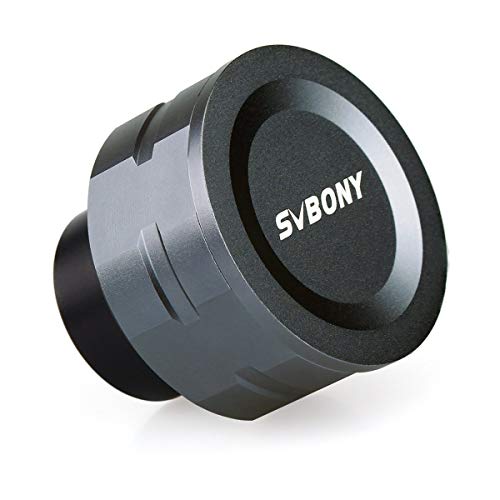
The SV105 is designed as an approachable starting point for astronomical imaging. It uses the IMX307 color sensor and acts as an electronic eyepiece for planetary and lunar photography. It’s ideal for beginners who want to record quick videos of bright planets and the Moon. The camera connects via USB and supports real-time viewing on a laptop or PC; no driver installation is required for plug-and-play use. Software options include Sharpcap Capture for Windows and AstroDMx Capture for Linux, with Android support via USB Camera apps. This combination provides straightforward access to quality planetary imagery without a steep learning curve.
64GB Digital Eyepiece Telescope Camera With 2K HD Video

This modern eyepiece-style camera focuses on convenience with built-in WiFi, a live 2K HD video feed, and a 16MP still image capability. It installs on most 25–50mm eyepieces, making it a versatile add-on for quick astrophotography or observing sessions. The device streams via a dedicated app, enabling remote control and live viewing on a smartphone. Its simple, tool-free mounting process helps beginners capture planetary and lunar scenes without extra hardware, while the integrated screen and control options support hands-free operation for longer sessions.
SVBONY SC715C Telescope Planetary Camera

The SC715C uses the IMX715 sensor with 1.45 μm pixels and a 512MB DDR3 cache. It delivers high-definition planetary images with reduced readout noise and improved dynamic range, beneficial in low-light conditions typical of planetary imaging. No separate driver is required, and it ships with dedicated software to streamline workflow. The combination of a larger pixel pitch, 4K-capable potential, and crisp frame quality makes this camera a strong option for serious planetary imaging and high-detail captures of the Moon and planets.
SVBONY SV305C Astrophotography Camera

The SV305C is positioned as a color entry-level camera focused on planetary and lunar imaging, with strong performance for EAA. It uses the IMX662 sensor on a 1/2.8″ back-illuminated chip, delivering enhanced light sensitivity and reduced noise. The 2.9 μm pixel size helps manage exposure on bright targets, decreasing glare and overexposure. Its compact form and USB connectivity allow quick setup with common amateur astronomy software, making it a practical step up for those expanding their planetary imaging repertoire.
Celestron NexImage 20 Solar System Camera

The NexImage 20 utilizes a 20 MP AR2020 back-illuminated CMOS sensor to deliver detailed lunar, planetary, and solar images. The high resolution supports fine surface features with clear contrast, and it is designed for quick, plug-and-play use with a telescope and computer. It is optimized for Solar System targets and supports ROI and autoguiding features to facilitate precise captures. The USB-C interface ensures modern connectivity and smooth data transfer for capturing high-detail frames with ease.
SVBONY SV205 Astrophotography Camera
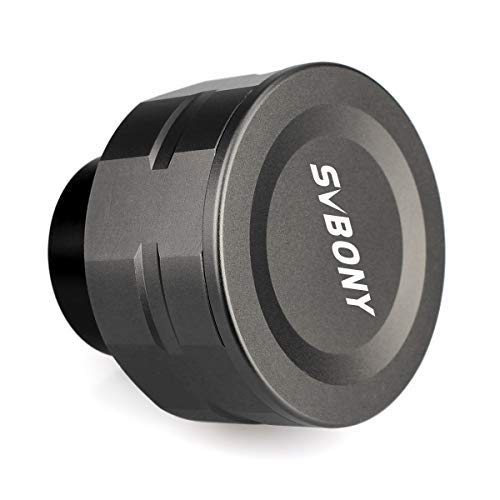
The SV205 offers a 7.05MP IMX415 sensor with 1.25″ eyepiece compatibility and USB 3.0 connectivity. It provides real-time dynamic observation with a high-frame-rate option in MJPG, and supports both 1080p video and high-resolution stills. Its dark-light compensation helps improve image clarity in low-light conditions, which is valuable when imaging faint planetary details or dimly lit lunar surfaces. This camera suits users seeking robust performance without complex configuration, enabling straightforward sharing of live or captured content to a computer.
Buying Guide: Key Purchase Considerations
- Sensor type and size: Larger or back-illuminated sensors generally offer better sensitivity and lower noise, improving planetary detail and lunar features under modest seeing conditions.
- Resolution vs. frame rate: Higher resolutions reveal finer surface details, but higher frame rates are crucial for stacking and capturing crisp video streams during short moments of steady air.
- Connectivity and software compatibility: Look for USB 2.0/3.0 or USB-C interfaces, and ensure compatibility with popular imaging software (SharpCap, FireCapture, AstroDMx, etc.) on Windows and Linux.
- Driver requirements: Many modern cameras are plug-and-play or require minimal driver installation, which simplifies setup for beginners.
- Lens and telescope compatibility: Verify that the camera accepts commonly used eyepiece sizes (1.25″ is standard) and can mount onto your telescope without adapters that degrade optical quality.
- Live viewing vs. capture quality: Some cameras excel at real-time viewing with a screen or app, while others prioritize high-quality stills or video capture for stacking and post-processing.
- Software ecosystem and updates: Cameras with dedicated software and ongoing support can improve long-term reliability and provide enhanced features as software evolves.
- Power and portability: Wireless options and built-in screens can enhance ease of use for field observations, especially when imaging remotely or in outreach settings.
- Price-to-performance balance: Entry-level cameras offer great value for learning, while mid-range models provide more depth for serious planetary imaging without a steep price.