Smartphone-powered microscopes unlock vivid, on-the-go insights for students, hobbyists, and professionals. This guide reviews five highly compatible options that pair easily with iPhone, Android, and computers, offering features from 4K resolution to CPL filters and LED illumination. Whether you’re examining plant cells, coins, or skin textures, these models deliver practical magnification with portable convenience. The following summary helps you compare key specs at a glance.
Summary Table of Chosen Products
| Product | Brand | Connectivity | Magnification Range | Notable Feature | Link |
|---|---|---|---|---|---|
| Wireless Digital Microscope | SKYBASIC | WiFi/USB | 50x-1000x | 8 LED lights for detailed imaging | Amazon |
| Ninyoon 4K WiFi Microscope | Ninyoon | WiFi/USB | 50-1000x | 4K wireless image capture | Amazon |
| Spider Farmer Phone Microscope | Spider Farmer | Clip-on USB/WiFi | 200x | LED, UV, CPL filter | Amazon |
| TENCCO Pocket Microscope | TENCCO | Phone adapter/USB | 100-250x | Flip-down slide base | Amazon |
| Carson MicroBrite | Carson | Phone clip/USB | 60x-120x | Compact pocket design | Amazon |
Wireless Digital Microscope by SKYBASIC

The SKYBASIC Wireless Digital Microscope provides 50x-1000x magnification through both WiFi and USB connections. It is designed for use with Android and iOS devices, making it easy to connect to a phone via the microscope’s own WiFi hotspot. A USB option expands compatibility to Windows and Mac computers. Eight adjustable LED lights illuminate the subject for clear detail, and the arrangement supports 1080p image quality for phones, with slightly lower resolution for computer displays. One-touch photo and video capture simplifies documentation. This model is well-suited for quick field observations or classroom demonstrations where mobile usage is essential.
Ninyoon 4K WiFi Microscope
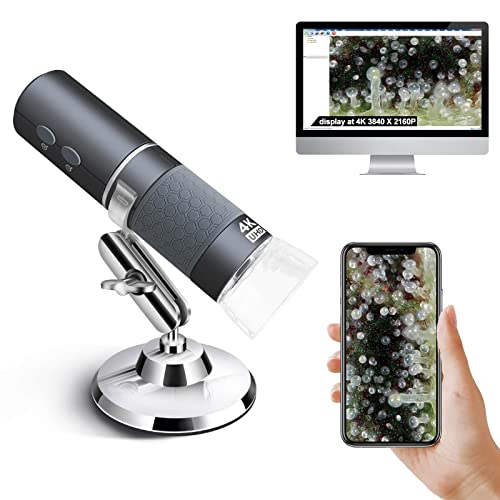
The Ninyoon model emphasizes 4K wireless capture, pairing 50-1000x magnification with broad compatibility across iOS, Android, Windows, Mac, and Linux. The device supports wireless operation with smartphones and USB connectivity for PC use. It highlights a wide angle and long focal length to accommodate different tasks—from inspecting coin collections to soldered circuitry. Note that 4K output will depend on the connected device’s display capabilities; if a phone screen cannot render 4K, it will show the maximum supported resolution of that device. This makes it a strong option for users who want premium image clarity on mobile devices.
Spider Farmer Phone Microscope

The Spider Farmer model centers on 200x magnification with built-in LED and UV lighting. It also includes a CPL polarizing filter to reduce glare, delivering truer color and improved texture visibility during observation. The device is lightweight, designed for quick setup—about 15 seconds—making it ideal for fieldwork, plant checks, or on-the-spot inspections of small items like coins or jewelry. The versatile lighting suite allows users to tailor illumination for different materials, enhancing contrast and reducing unwanted reflections.
TENCCO Pocket Microscope

The TENCCO pocket microscope offers a practical 100-250x magnification with a unique flip-down slide base that assists in placing and aligning specimens. Its prismatic reflector design and frosted anti-glare surface help deliver high-resolution color images in various lighting conditions. A dedicated phone adapter allows users to attach the device securely to a phone for photo and video capture, enabling quick documentation and sharing. This model emphasizes portability and straightforward operation for school, home science, or travel use.
Carson MicroBrite Portable Digital Microscope

Carson’s MicroBrite emphasizes a compact, durable pocket design with magnification up to 120x. It’s a digital pocket microscope that blends portability with reliable optical quality for quick observations in the field or classroom. The built-in LED light ensures consistent illumination in diverse environments, enabling clear viewing of small specimens without requiring external light sources. The device is compatible with a phone clip and a companion app, allowing easy photo capture and sharing from mobile devices.
IWOBAC Digital Microscope
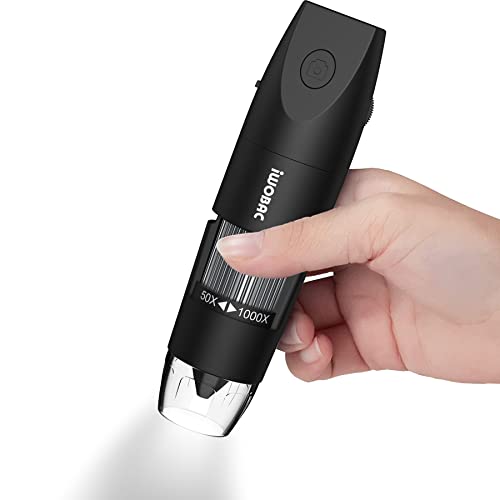
The IWOBAC model supports 50x-1000x zoom with a USB/WiFi interface, offering 1080p image output for smartphones and 720p for computers. It features eight dimmable LEDs for adjustable lighting, a wide compatibility range across iOS and Android as well as Windows and Mac, and easy switching between WiFi and USB connections. The device is pitched as a family-friendly option suitable for education, hobbies, and light testing of textiles, coins, and small parts, with an intuitive app-based control system.
MIAO LAB 150X Phone Microscope

The MIAO LAB adapter combines CPL filtering with 150x magnification when used with a phone’s own magnification. It emphasizes glare control and color saturation for clearer micrographs, particularly in photography-friendly conditions. The device is designed for universal clamps compatible with a wide range of smartphones and emphasizes portability alongside a rechargeable design, supporting several hours of use per charge. It is a suitable choice for educators, students, and hobbyists seeking enhanced image quality with minimal setup.
Veedzoens 45X Pocket Microscope

The Veedzoens 45X pocket microscope offers a compact 45x magnification with a two-level adjustable LED system, suited for close-up observation of coins, stones, plants, and insects. The universal lens clip supports broad smartphone compatibility, including iPhone and Android devices. It provides a lightweight, travel-friendly option for quick checks and fieldwork. The dual-LED setup helps balance lighting for high-contrast features while keeping power consumption reasonable for extended use outside the lab.
Buying Guide: Key Purchase Considerations
- Magnification range and image quality: Choose models that offer a practical balance between magnification (50x-1000x is common) and camera sensor quality. For general field use, 100x-250x often suffices; for micro-details, 200x-1000x provides more detail, but ensure your device can display at that resolution.
- Connectivity: Wireless (WiFi) options boost mobility and ease of use with phones, while USB connections tend to offer more reliable, consistent performance on computers. Some models support both, offering flexibility for different workflows.
- Lighting: LEDs are essential for consistent illumination. Look for adjustable brightness and color temperature (cool/warm) to minimize shadows and glare. CPL filters are a plus for reducing reflections on shiny subjects.
- Compatibility: Confirm compatibility with your devices (iOS, Android, Windows, macOS, Linux). A model that supports both mobile and desktop workflows can be the most versatile option.
- Portability and ease of use: Clip-on designs and pocket-sized models are ideal for fieldwork and classrooms. Consider weight, setup time, and whether a dedicated stand is included for steady imaging.
- Accessories: Look for included adapters (phone clamps, slide bases, USB cables) and whether the device offers an independent app or relies on device-native camera apps for capture and storage.
- Durability and support: For educational or frequent travel use, select models with robust construction and maker or seller support, including replacement parts or accessories if needed.
Compared to traditional lab microscopes, phone-compatible models prioritize portability and ease of sharing. When selecting a model, map your primary use cases—education, fieldwork, jewelry inspection, or electronics testing—and match magnification, lighting, and connectivity to those needs. For quick, everyday tasks, a mid-range 100x-250x with reliable LED lighting and strong smartphone integration often delivers the best balance of performance and convenience. For premium image quality and 4K capture, opt for models emphasizing high-resolution wireless output and broad device compatibility, even if they are a bit larger.