The global shutter CMOS cameras below are designed to capture fast-moving objects with minimal distortion, making them ideal for industrial inspection, robotics, and high-speed photography. This guide highlights five strong options from reputable brands, focusing on resolution, frame rate, lens coverage, and ease of integration. Each choice addresses different use cases—from compact embedded modules to flexible USB webcams suitable for desktops and laptops.
| Product | Brand | Key Strength | Typical Use |
|---|---|---|---|
| ELP Global Shutter USB Camera — Wide Angle Webcam | ELP | 120° wide, low distortion, 90fps | Desktop and laser engraving setups |
| ELP Global Shutter USB Webcam — 1080P 90fps | ELP | Varifocal 5–50mm, manual zoom | Laptop and portable stations |
| MMlove USB Stereo Camera Module 1200P | MMlove | Synchronous dual lens, global shutter | VR, PC, Raspberry Pi setups |
| ELP Global Shutter Camera Module, 120° Lens | ELP | 120° no distortion, compact board | Machine vision, embedded systems |
| SVPRO 2MP Global Shutter USB Camera with Dual Lens | SVPRO | 3D synchronized dual lens, high frame rates | Industrial and machine vision |
Across these options, expect 2MP to 4MP class resolution, 60–120 frames per second at full or reduced resolutions, and global shutter architectures that prevent skew and rolling artifacts during fast motion. The right pick will depend on your setup—whether you need embedded compact boards for tight spaces, or versatile USB interfaces for quick trials and field work. The following sections break down five top contenders with objective specs and practical considerations.
ELP Global Shutter USB Camera — Wide Angle Webcam

This compact USB camera integrates a 2MP sensor with a 120-degree wide-angle, distortion-free lens suited for tight installations. It uses a global shutter to capture fast-moving objects without rolling artifacts, delivering sharp frames at up to 90fps at 1920×1200 or 1080p. The device supports an ultra-wide HFOV of about 126 degrees and a small 38mm x 38mm footprint, making it ideal for hidden or recessed mounting in industrial and lab environments. It is plug-and-play for computer systems and laser engraving workflows that demand precise motion capture.
Key considerations include the AR0234 sensor construction for image quality and the robust performance in dynamic scenes. The wide-angle lens helps cover broad working envelopes, reducing the need for multiple cameras. Installation flexibility and the ability to integrate into varied video systems make this model a practical first option for quick high-speed imaging tasks.
ELP Global Shutter USB Webcam — 1080P 90fps

This webcam variant emphasizes a 2MP 1920×1200 sensor delivering 90fps, with a manual zoom and a 5–50mm varifocal lens. The global shutter eliminates rolling artifacts, ensuring consistent exposure across fast scenes. The adjustable focal range supports both close-up and distant subjects, giving operators the freedom to tailor the field of view without swapping lenses. This makes it well-suited for desktop labs, remote monitoring, and process inspection applications where subject distance may vary.
Practical strengths include straightforward USB compatibility, flexible focal adjustment, and reliable performance in variable lighting when tracking high-speed events. The ability to fine-tune brightness and sharpness via the lens aids in obtaining clean, nearly artifact-free imagery during experimental trials or live demonstrations.
MMlove USB Stereo Camera Module — 1200P Global Shutter

Designed as a stereo camera module, this MMlove unit provides synchronous dual lenses and a 1200P @ 60fps capture rate with a global shutter. The built-in dual lens setup enables synchronized dual-image capture, which is beneficial for depth perception, motion tracking, or stereo vision workflows. Its 112-degree wide-angle field of view supports broad coverage, while the high-quality 1/2.9″ sensor helps preserve detail in fast sequences. This model is well-suited for VR, PC, Raspberry Pi projects, and certain robotics setups where depth cues improve interpretation of scenes.
When evaluating, consider the power and interface requirements for dual-stream output, plus the compatibility with your preferred software stack (e.g., OpenCV, ROS). The synchronous feature reduces temporal misalignment between streams, which is critical for accurate motion analysis and 3D reconstruction tasks.
ELP Global Shutter Camera Module — 120° No Distortion Lens

This camera module targets embedded and machine-vision applications with a compact 38mm x 38mm board and a 120-degree distortion-free lens. The 2MP AR0234 sensor delivers 1920×1200 resolution at up to 90fps, offering a balanced mix of speed and clarity for compact industrial installations. The module’s small footprint enables discreet mounting in tight spaces or integration into custom enclosures and projects that require a lightweight, low-profile camera board.
Consider the ease of integration into machine-vision pipelines, the availability of driver support for common platforms, and the practicality of mounting in industrial equipment. The wide field of view helps capture more context per frame, reducing the need for multiple cameras in panoramic setups.
SVPRO 2MP Global Shutter USB Camera With Dual Lens

The SVPRO option stands out with a 3D synchronized dual-lens module and a high-speed 2MP Global Shutter system. It supports multiple resolutions and frame rates (up to 60fps at 1200P, 60fps at 720P, and up to 120fps at 480P). The 85-degree viewing angle provides a practical balance between coverage and detail, while the synchronized dual-stream design is advantageous for precise motion analysis and depth sensing in industrial environments. This model is particularly suited for manufacturing automation and quality control tasks that require robust stereo imaging.
Important considerations include the need for dual-lens calibration, the complexity of integrating stereo feeds into your software, and the potential for increased data bandwidth. Its global shutter helps preserve frame integrity in rapidly changing scenes, which is essential for reliable defect detection and tracking in production lines.
innomaker GS Camera Module for Raspberry Pi
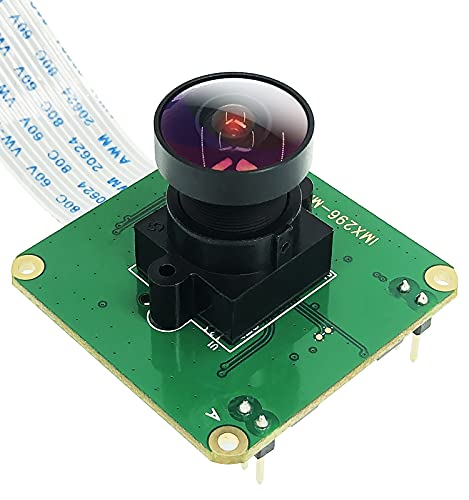
The innomaker GS module brings a global shutter sensor to the Raspberry Pi ecosystem with a dedicated IMX296 mono sensor delivering 1.58MP resolution at 60fps. It’s designed for Pi 5/4/3/Zero compatibility and offers external trigger support for precise timing in laboratory or field deployments. The package includes flexible streaming options (Mode0 continuous, Mode1 fast trigger) and high-speed Y10/YUV outputs, enabling rapid capture with low latency. This option is especially relevant for hobbyists and educators looking to prototype real-time imaging projects on low-power platforms.
Consider driver support, community examples, and the balance between resolution and speed when choosing this module. The external trigger and fast response are key for experiments requiring tightly timed image captures, such as motion studies or experimental robotics on a Pi-based control system.
MMlove 1200P USB Camera With 10X Optical Zoom

This MMlove model combines a 1200P resolution with a 10X optical zoom and a 5–50mm manual focus lens. The 90fps global shutter ensures smooth motion capture while maintaining depth of field control across varying distances. It is an all-purpose conferencing and streaming camera that also suits experiments requiring adjustable framing, such as dynamic demonstrations or teach-and-compare studies in a classroom or lab setting. The combination of zoom flexibility and distortion-free imaging makes it a versatile pick for many users who need both detail and reach in a single device.
When assessing, consider the light conditions, the trade-off between zoom range and frame rate, and the compatibility with your operating system and software. The 90fps capability aids in smooth video playback and responsive live feeds for instructional or demonstration purposes.
Buying Guide: Global Shutter Cameras For Speed And Clarity
Global shutter cameras capture all pixels simultaneously, avoiding the skew that occurs when different parts of the sensor record at different times. This is crucial for high-speed motion, fast machinery, or precise visual measurements. When selecting a model, consider the following factors:
- Resolution and frame rate: Higher resolution is valuable for detail, while higher frame rates improve motion fidelity. Balance your needs with processing and storage limits.
- Sensor type and image quality: Look for reputable sensors (e.g., AR0234, IMX296) and low-distortion wide-angle lenses if broad scene coverage is essential.
- Lens options and field of view: Wide lenses cover more area but can introduce distortion if not corrected. Check for distortion-free designs or post-capture correction capabilities.
- Interface and compatibility: USB cameras are convenient for laptops and desktops; embedded boards suit robotic or industrial systems. Verify driver support and software integrations (OpenCV, ROS, etc.).
- Size, mounting, and installation: Boards and compact modules are easier to conceal in equipment, while larger cameras may offer more robust stabilization and easier lens changes.
- Synchronization and multi-camera setups: If depth or stereo vision is required, dual-lens models or synchronized modules are valuable, though they demand additional calibration and bandwidth.
- Power, heat, and environmental tolerance: Industrial environments may require rugged cited ranges and reliable cooling strategies for sustained operation.
Performance comparisons across these five options show trade-offs between compact embedded modules and flexible USB cameras with zoom and dual-lens capabilities. For static lab work, a compact module with a fixed wide field can be ideal. For dynamic environments, a dual-lens or higher-frame-rate option with sturdy USB connectivity may provide more reliable data streams and easier integration with existing software pipelines. In education or prototyping, Raspberry Pi-compatible modules offer portability and cost-effectiveness, while professional-grade USB webcams excel in plug-and-play simplicity for demonstrations and quick tests.
In summary, the best global shutter CMOS camera for your setup will depend on where you value field of view, depth perception, or speed. Evaluate your workflow, available processing power, and the software ecosystem you plan to use. The options above cover a broad spectrum—from embedded boards and compact modules to versatile USB cameras designed for desktop and laptop use—helping you choose the right tool for precise, artifact-free imaging in high-speed scenarios.