Photographers seeking expansive perspectives on a DSLR can benefit from selecting the right wide-angle lens. The following picks cover ultra-wide primes, versatile zooms, and specialized fisheye options, offering sharpness, low distortion, and creative control across Canon, Nikon, and other DSLR systems. Each option is evaluated for angle of view, minimum focusing distance, and overall image quality to help you capture dramatic landscapes, architecture, and interior scenes with confidence.
| Product | Brand | Key Benefit |
|---|---|---|
| Rokinon 14mm F2.8 | Rokinon | Ultra-wide dramatic perspective on APS-C |
| Canon EF-S 10-18mm | Canon | Convenient ultra-wide zoom for Canon APS-C |
| Sigma 10-20mm f/3.5 EX DC HSM | Sigma | Bright, versatile wide zoom for Nikon DX shots |
| Rokinon 10mm F2.8 ED | Rokinon | True ultra-wide with edge-to-edge coverage |
| Altura Photo 8mm Fisheye | Altura Photo | 360-degree style fisheye for dramatic curvature |
The following sections highlight each product with a brief overview, supported by the listed features and typical use cases for DSLR photography.
Rokinon 14mm F2.8 for Canon EF

The Rokinon 14mm F2.8 IF ED Super Wide Angle offers an approximately 90-degree angle of view on APS-C bodies, delivering dramatic perspective that suits landscapes and interior architecture. A minimum focusing distance of 0.9 feet enables close-up compositions with a shallow depth of field when desired. The built-in petal-type hood helps reduce lens flare, while the wide aperture of F2.8 supports low-light shooting. With a maximum diameter of 87mm, it remains a practical, compact option for travel and field work.
Altura Photo 58mm Wide Angle + Macro

This attachment expands field of view for 58mm lenses, providing a practical solution for compact setups. It includes a detachable macro lens, enabling high-resolution close-ups of small subjects. Compatibility spans Canon and Nikon DSLR bodies, making it useful for photographers who want a budget-wide option without swapping lenses. It’s particularly suited to travel and macro-heavy scenes where space is limited and flexibility matters.
Canon EF-S 10-18mm f/4.5-5.6 IS STM

The Canon EF-S 10-18mm f/4.5-5.6 IS STM is a lightweight ultra-wide zoom tailored for Canon APS-C cameras. Its focal length range from 10 to 18mm provides flexible framing for landscapes, architecture, and interior shots. The STM motor supports smooth focusing and video performance, while image stabilization helps maintain sharpness in low-light conditions and at slower shutter speeds. Closest focusing distance is comfortable for closer interior details, making it a versatile travel companion.
Sigma 10-20mm f/3.5 EX DC HSM

This Sigma lens delivers a bright constant f/3.5 maximum aperture with a large ultra-wide angle for Nikon DX cameras. Its high-contrast performance and reduced flare via multi-layer coatings support sharp landscapes and architectural photography across the 10-20mm range. The Hyper-Sonic Motor (HSM) provides quick and quiet autofocus, making it suitable for both stills and video work in interior spaces and wide vistas.
Rokinon 10mm F2.8 ED AS NCS CS

The Rokinon 10mm F2.8 ED AS NCS CS offers an edge-to-edge 106-degree field of view on Canon APS-C cameras with minimal distortion. The fast F2.8 aperture enhances low-light performance and depth of field control for dramatic interior shots or starry skies. Its compact build makes it a practical choice for landscape shooters who need extreme wide coverage without compromising image quality, though manual focus requires careful adjustment in close proximity and at faster distances.
Altura Photo 8mm Fisheye
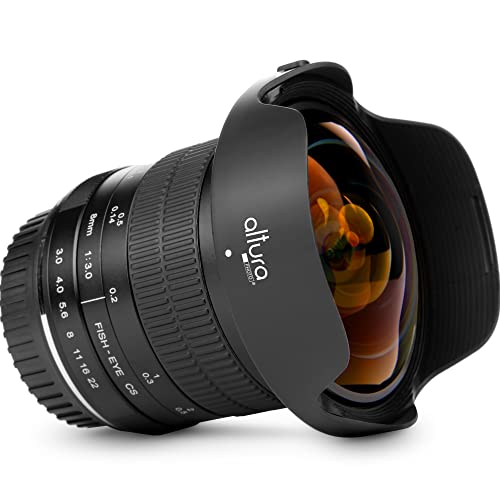
The Altura Photo 8mm fisheye provides a full circular or hemispherical image with a 180-degree field of view on Canon APS-C bodies, and even wider coverage on full-frame sensors. It’s designed for dramatic, distorted perspectives, making it ideal for creative landscapes, architecture, and immersive sports photography. The metal construction and multi-layer coating support durability and image clarity, while manual focus keeps control in the photographer’s hands.
Buying Guide: What to Consider When Choosing a DSLR Wide-Angle Lens
- Sensor compatibility and mount: Confirm your camera’s sensor size (APS-C vs. full-frame) and mount type to ensure proper coverage and compatibility.
- Focal length and field of view: Ultra-wide primes (around 14–12mm) produce strong perspective, while zooms (10–18mm, 10–20mm) offer flexible framing without swapping lenses.
- Aperture and low-light performance: Wider apertures (f/2.8) enable brighter images in dim environments but may require more careful focus at extreme angles.
- Autofocus vs. manual focus: Some ultra-wide primes rely on manual focus, which can affect workflow for moving subjects or video. Consider lenses with smooth autofocus if you need speed.
- Weight, size, and durability: Travel and field use benefit from compact, robust designs with protective coatings against flare and dust.
- Distortion and perspective: Fisheye and ultra-wide lenses introduce distortion that can be visually compelling but may require correction in post-processing for architectural work.
- Macro capability and close focus: Some wide-angle lenses offer close-focusing distances or detachable macro attachments, expanding creative options for product or nature shots.
- Build and weather sealing: Consider weather resistance for outdoor shoots, especially in landscapes or architectural environments.
- Budget and value: Weigh build quality, optical performance, and compatibility against price to determine the best value for your kit.
- Optional accessories: Lens hoods, hood adapters, and filters can influence handling and image quality, especially in bright, reflective environments.
When assessing options, compare sharpness at the edges, vignetting control, and color rendition across the frame. For architecture and interiors, pay particular attention to distortion correction and perspective control. For landscapes and night skies, evaluate coma and flare resistance at wide angles. Finally, consider how often you travel with your gear; a lighter, more compact lens can significantly impact daily use and willingness to shoot more often.