Transferring images from a digital camera to a phone or tablet is essential for quick sharing, editing on the go, and backing up memories. The best solutions today combine simple setup, reliable data transfer, and broad device compatibility. This guide highlights five top USB, Lightning, and USB-C card readers that make mobile photo transfer fast and straightforward, without requiring extra apps.
| Product | Connection | Key Benefit |
|---|---|---|
| SZHAIYIJIN SD Card Reader | Lightning / USB (iPhone/iPad) | Plug-and-play with SD/TF cards; no app required |
| WORLDBOYU Lightning to SD TF Card Reader | Lightning | Two-way transfer; fast import to iOS devices |
| MTIQHS iPhone SD Card Reader USB C | USB-C | Wide compatibility; fast 60MB/s transfer |
| Ardaddyn Universal 4-in-1 SD Card Reader | Type-C / Lightning / USB | Multi-port for various devices; high transfer speed |
| xdgeLoad USB-C SD Card Reader | USB-C | 2-in-1 SD/MicroSD with bidirectional transfer |
Each option below explains how it works, what devices it supports, and practical considerations for choosing the right one for your workflow. The focus is on direct transfer to iPhone, iPad, or other compatible devices, with plug-and-play simplicity and reliable performance in real-world use.
SZHAIYIJIN SD Card Reader for iPhone

The SZHAIYIJIN reader supports SD and TF/microSD cards and connects via a Lightning interface to iPhone or iPad. It requires no app installation; once the memory card is inserted, open Photos to import. It handles standard SD/SDHC and Micro SD formats, enabling fast, direct transfers without removing the card from the camera. The device is designed for straightforward operation in photography workflows, though it notes a 500 mA peripheral limit and does not support printers or hard drives.
WORLDBOYU Lightning to SD TF Card Reader

WORLDBOYU’s reader is designed for iOS devices and supports SD and TF (Micro SD) cards. After plugging in, open the Photos app to import, or use Files for broader file types. It offers a simple, travel-friendly way to move high-resolution photos and videos from your camera to your iPhone or iPad, with a typical 5–10 second connection wait. It lists compatibility with standard photo formats and SD/HD video formats, including RAW, and supports cards up to 512GB.
MTIQHS iPhone SD Card Reader USB C

The MTIQHS card reader uses a USB-C connector, making it suitable for newer iPhone models with USB-C, iPads, and compatible laptops. It emphasizes high-speed transfers up to 60MB/s and claims a plug-and-play experience without extra apps. The device is compact for travel, and the design aims to avoid blocking other ports while connected. This solution suits users who frequently move between a USB-C phone or tablet and camera media.
Ardaddyn Universal SD Card Reader 4-in-1
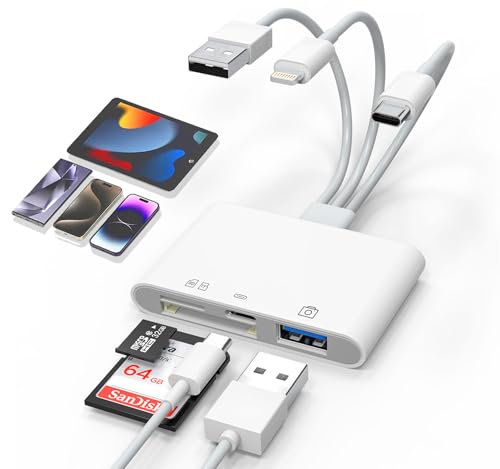
Ardaddyn offers a four-in-one USB/Lightning/Type-C card reader with three main interfaces, designed to adapt to a wide range of devices—from iPhone and iPad to USB-C laptops. It supports SD, SDHC, SDXC, Micro SD, and micro variants, enabling fast data transfer in outdoor or travel settings. The device also includes a USB port to connect peripherals, providing a practical bridge between camera media and mobile productivity in one compact unit.
xdgeLoad USB-C SD Card Reader

xdgeLoad’s USB-CSD reader pairs a dual-slot design with SD and Micro SD support, optimized for devices with USB-C ports. It emphasizes bidirectional transfer and a smooth, single-USB-C connection that minimizes port blockage. The unit is marketed for iPhone 15/16/17 series, iPad, Mac, and other USB-C devices, offering a quick, plug-and-play workflow with memory cards from cameras, phones, or other gear.
Buying Guide: Key Considerations For Choosing A Card Reader
- Device compatibility: Confirm your phone, tablet, or computer supports the reader’s connector (Lightning, USB-C, or USB-A) and card formats (SD, SDHC, SDXC, Micro SD).
- Transfer speed: Look for claimed speeds (60MB/s or higher) and the effective real-world performance for RAW and high-resolution video files.
- Power requirements: Some readers have a 500 mA limit on peripherals; ensure your use case stays within limits to avoid device stalls.
- App independence: If you want true plug-and-play, choose models that state no app is required for import.
- Portability and build: For travel, select compact, durable housings with a minimal footprint to avoid blocking other ports.
- Expansion features: Multi-port readers (4-in-1) can replace multiple adapters, offering USB ports for additional peripherals like USB drives or keyboards.
- File format support: Ensure RAW, JPEG, and video formats used on your camera are supported for direct import to your device’s Photos or Files app.
When selecting a solution, weigh how often you transfer full RAWs versus JPEGs, whether you need two-way transfer, and whether you require compatibility with both iOS and Android ecosystems. A single, multi-format reader can streamline travel workflows, while a dedicated Lightning or USB-C model may offer slightly faster, more reliable performance for frequent shooters.