Whether you’re a casual snorkeler or an aspiring underwater photographer, affordable camera housings can extend your horizons without breaking the bank. The selections below cover popular brands and reliable depth ratings, helping you protect your gear while exploring the depths. Each option offers solid build quality, straightforward controls, and compatibility with widely used cameras. Compare features, depths, and accessories to find the best value for your next dive or snorkeling adventure.
| Brand | Model / Compatibility | Depth Rating |
|---|---|---|
| Starbea | Seafrogs 60m/195ft for Olympus TG-7 | 60m / 195ft |
| OM SYSTEM | PT-059 Underwater Housing for TG-Series | 45m / 147ft |
| FiTSTILL | Go Pro Hero 13/12/11/10/9 Underwater Housing | 60m / 196ft |
| Sea frogs | Canon G7X II Underwater Housing | 40m / 130ft |
| Sea frogs | Sony RX100 VII Underwater Housing | 40m / 130ft |
Note: Depth ratings vary by model and configuration. Always perform a thorough leak test before diving and follow manufacturer guidelines for each housing. The selections below include a mix of compact action-cam housings and mirrorless/compact camera housings to suit different setups and budgets.
Seafrogs 60m TG-7 Underwater Housing
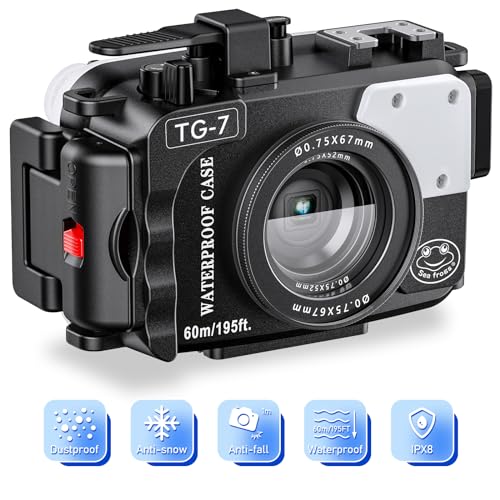
The Seafrogs housing for the Olympus TG-7 is designed for divers who want dependable protection at depth. It supports up to 60 meters (195 feet), making it suitable for recreational dive trips and science-oriented explorations. The construction uses polycarbonate, ABS plastic, stainless steel, EPDM rubber, and a clear plate glass window to balance durability with optical clarity. It features dual fiber-optic ports for external flash synchronization and a double-threaded front accepting 52mm and 67mm lens accessories, expanding compatibility with various lenses and accessories. An integrated leak-detection sensor adds a layer of safety on deeper dives. This unit pairs well with standard TG-7 configurations for budget-conscious underwater shooters.
OM SYSTEM PT-059 Underwater Housing for TG-Series

The PT-059 is built to withstand depths up to 45 meters (147 feet) and provides straightforward access to all camera controls. It’s compatible with common upgrade accessories and lenses marketed for TG-series cameras, making it a flexible option for those who want to expand their setup over time. The housing supports step-up rings and macro or wide conversion lenses, which can be added separately for enhanced underwater imaging. It’s a practical choice for shooters who value ease of use and compatibility with existing TG-series gear.
FiTSTILL Go Pro Hero 13/12/11/10/9 Underwater Housing

This FiTSTILL housing protects Go Pro cameras from water pressure down to 60 meters (196 feet). It features upgraded waterproof sealing rings and a sturdy stainless steel build to resist corrosion from saltwater exposure. The outer shell supports GoPro mounting systems, enabling hands-free operation for underwater shooting, snorkeling, or surf sessions. The stainless construction helps prevent rust, and the design emphasizes a secure seal to minimize leaks during deep water activity. It’s a budget-friendly pick for GoPro divers seeking reliable protection without premium pricing.
Seafrogs Canon G7X II Underwater Housing

Designed for Canon G7X II, this Seafrogs housing supports depths up to 40 meters (130 feet). It’s built for water activities like surfing, snorkeling, and diving, and is described as easy and safe to use because each unit is tested individually. The housing accommodates underwater photography with protective seals and a clear, non-reflective housing window to minimize glare and reflections while shooting underwater. It’s a practical option for compact system users who want a cost-effective way to explore underwater scenes with a highly portable setup.
Sea Frogs RX100 VII Underwater Housing

Specifically shaped for the Sony RX100 VII, this Sea Frogs housing offers up to 40 meters (130 feet) of depth rating with IPX8 waterproof certification. It emphasizes anti-reflection glass to minimize underwater glare and reflections, helping deliver clearer, more natural colors in bathymetric environments. The design supports camera controls accessible while the camera is in the housing and is suited for divers who want a compact, high-quality setup for underwater photography and videography. It pairs well with RX100 VII’s strong image quality in a budget-friendly protective shell.
SeaLife SportDiver Ultra Underwater Smartphone Housing

The SportDiver Ultra is a dedicated underwater smartphone housing designed for a broad range of Android and iPhone models. It includes audible and visual moisture and pressure sensors, which alert users to potential leaks. The case is designed with a larger interior to accommodate different phones, and interior tension springs and rubber grip tabs help secure the device. Underwater lighting options and accessories are compatible with SeaLife’s System, enabling enhanced color and detail in underwater scenes. The package has earned recognition in ScubaLab for its performance and value.
ProShot Dive 2.0 Underwater Housing for iPhone

The ProShot Dive 2.0 accommodates iPhones from older models to current generations (with noted limitations on touchscreen use inside the case). It offers waterproofing down to 130 feet (40 meters) and includes a camera app feature to unlock underwater shooting modes. The case is designed for compatibility with GoPro mounts and supports hands-free filming. It is a versatile option for iPhone users who want to explore underwater environments without buying a dedicated camera system, though touchscreen use is restricted while sealed.
Buying Guide: Key Purchase Considerations
Depth rating and intended use are the most critical factors when choosing an affordable underwater housing. For casual snorkeling, a 30–40 meter rating may suffice, but divers seeking reef photography or macro work should consider models with higher ratings and stronger seals. Camera compatibility matters; pick a housing designed for your specific camera or a universal housing that supports common accessory options like external lights or macro lenses. Build quality matters as well, with reinforced polymer, stainless steel hardware, and proper o-ring seals reducing leakage risk. Consider access to camera controls, ease of use underwater, and weight. For smartphones, ensure the housing supports your model size and includes moisture alarms and reliable sealing. Finally, factor in accessory ecosystems: compatibility with lenses, filters, and strobes can expand your creative possibilities without a significant price jump.
In summary, the best value comes from understanding your diving habits, camera system, and the balance between depth capability and feature sets. The five options highlighted above provide a spectrum of price-to-performance ratios, with reliable brands and tested depth ranges. When paired with proper maintenance, routine leak checks, and surface tests, these housings can enable compelling underwater imagery without premium-price costs.