Choosing the right camera for podcasting on a budget involves balancing video quality, microphone options, ease of use, and future-proof features. The following five cameras and webcams offer strong value for new and growing podcasters, delivering crisp 1080p or higher video, reliable autofocus, simple integration with streaming software, and helpful extras like night vision or ring lights. Each option is selected for affordability, versatility, and practical performance in typical home studio setups.
| Product | Key Benefit | Best For |
|---|---|---|
| BREGOO 5K Video Camera | Cinema-grade detail with 5K/4K options | Vlogging, interviews, on-the-go filming |
| EMEET S600 4K Webcam | Advanced PDAF autofocus and light balance | Live streaming, gaming, beauty streams |
| VETEK Full HD Camcorder | Infrared night vision and remote control | Night shooting, family events |
| Angetube Streaming Webcam | Ring light, remote control, 5x zoom | Portraits, remote broadcasting |
| BAILIXIN 3-in-1 Mic | Wireless lavalier with long range | Clear podcast audio with mobility |
Below, each product is explored with a concise overview, practical considerations for podcast use, and how it stacks up for budget-conscious creators.
BREGOO 5K Video Camera: 5K Cinematic Clarity for Vloggers

The BREGOO 5K Video Camera is positioned as a versatile all-in-one option for creators who want cinema-like detail without complex setup. It records 5K/20fps and 4K/60fps video with a 64MP stills capability, powered by a high-sensitivity CMOS sensor. A 3.0″ IPS touch screen supports flexible framing, including selfies and group shots, which can be valuable for multi-guest podcasting or interviews. The included creator bundle adds a 32GB memory card, dual batteries, a microphone, and other accessories to minimize extra purchases. This model doubles as a webcam and supports WiFi, which makes it convenient for live sessions or remote guests. In a budget context, it represents a strong value for those who want high resolution without renting or upgrading gear later.
Practical podcast considerations: its 270° flip screen helps with framing while recording solo or with guests. The integrated mic and external mic support expand audio options, a critical factor for podcasts where voice clarity is essential. Battery life and external kit presence reduce mid-shoot interruptions. For streaming, you’ll want to pair this with software that can accept HDMI/USB input and manage encoding, as well as a tripod or stabilization setup for steady shots.
EMEET S600 4K Webcam: Clarity and Autofocus for Professional Streams

EMEET’s S600 webcam targets streamers who demand sharper 4K video and reliable autofocus. With a Sony 1/2.5″ sensor and PDAF, it provides crisp, stable imagery at 4K 30FPS or 1080P 60FPS. The camera integrates auto light balancing to reduce shadows and highlight detail in varied lighting—ideal for home studios with natural light or mixed lighting. A pair of built-in microphones offers basic audio capture, with more control via EMEET software. FOV is adjustable on 1080P and fixed at 73° in 4K, shaping how much of your background is visible. The S600 is well-suited for podcasters who primarily record through a computer and want plug-and-play convenience without extra gear.
Podcast use notes: PDAF autofocus helps maintain focus on speakers even with movement, while noise reduction in the mics aids in cleaner dialogue. If your setup includes multiple guests, using external mics or a mixer would improve overall audio quality. The built-in privacy cover is a practical touch for on-camera privacy when not recording.
VETEK Full HD Camcorder: Night Vision and Remote Control

The VETEK camcorder offers a practical blend of Full HD resolution and infrared night vision. The 1080P, 24MP sensor delivers clear video and stills, while the 18x digital zoom supports flexible shooting distances. Remote control and a mic are included, along with a small tripod, making it a compact option for on-location interviews or lower-light podcast recordings. The 3.0″ LCD provides a straightforward interface for quick edits and framing adjustments. For podcasters on a budget, the VETEK option adds night-vision capability to cover content recorded in dim environments or during travel.
Important podcast considerations: infrared night vision helps keep visuals consistent when lighting changes, but color may shift in infrared modes. External lighting remains a strong complement. Consider whether you need high-resolution stills or primarily video, as this camcorder emphasizes versatility and simplicity rather than ultimate image fidelity.
BAILIXIN 3-in-1 Microphone: Wireless Lavalier for Clear Audio

The BAILIXIN wireless lavalier microphone is focused on delivering crystal-clear voice capture for iPhone, Android, and cameras, with a long-range 65-foot connectivity and a 7-hour battery life. Its noise reduction features are designed to minimize ambient interference, which is critical in podcast environments with competing sounds. The system supports real-time audio monitoring, which helps creators verify audio during recording. This microphone is especially valuable for mobile setups or where you need the guest to move freely without dragging a wired mic. The flexible compatibility broadens its use beyond just podcasts to interviews and field reporting.
Podcast implications: wireless mics reduce cable clutter and enable dynamic interview formats. Real-time monitoring lets you catch issues early, and the 7-hour battery supports longer sessions. Pairing with a good mixer or audio interface can further elevate voice quality and consistency across episodes.
VETEK 1080P Camcorder: Infrared Night Vision and Portable Design
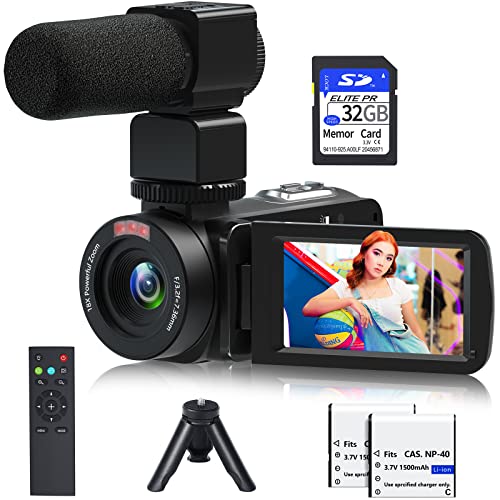
This VETEK model offers 1080P recording with night-vision capabilities, remote control, and a bundled kit that includes a microphone, mini tripod, two batteries, and a 32GB SD card. It’s tailored for novices or those who want a simple, ready-to-use package that covers both day and night shoots. The 3.0″ LCD screen supports straightforward framing and quick adjustments, making it suitable for beginner podcasters who value an all-in-one option. The inclusion of extras reduces the need for immediate additional purchases, a practical advantage for budget-conscious creators.
Podcast-use guidance: while 1080P is adequate for many audiences, you may want to consider upgrading to higher resolution gear as your channel grows. Nevertheless, the bundled accessories help you get started quickly with minimal setup time.
Buying Guide: Key Purchase Considerations for Budget Podcast Recording
When evaluating budget cameras for podcasting, consider the following factors to ensure you pick a device that meets your production needs without overspending:
- Video resolution and frame rate: While 1080p is often sufficient, 4K devices offer clearer detail and future-proofing. For livestreams, reliable 30FPS or higher is desirable; some cameras also support 60FPS for smoother motion.
- Autofocus and exposure: PDAF or reliable autofocus helps keep guests in frame as they move. Look for good low-light performance or built-in light adjustments to minimize noise in dim rooms.
- Audio integration: Built-in mics can help, but external mics or lavalier setups usually deliver far better sound. Check for compatibility with your computer or mixer, and consider models with monitoring capabilities.
- Connectivity and compatibility: USB webcam modes simplify streaming with OBS, Zoom, or other software. HDMI capture devices can expand usage, but add cost and complexity.
- Portability and setup time: For a home studio, a compact camcorder might suffice; for on-the-go or field broadcasts, a lighter, simpler setup helps reduce friction.
- Accessories and bundles: Bundles that include mics, tripods, and memory cards can save money and reduce shopping complexity for beginners.
- Future-proofing and expandability: Consider whether you’ll later upgrade audio, lighting, or add additional cameras (e.g., for multi-camera streams). A versatile base model can scale with your needs.
- Budget vs. return on investment: Balance upfront cost with the potential improvement in listener experience. Prioritize audio quality as audio often drives engagement more than video in podcasts.
In summary, the best budget option for a podcast hinges on how you’ll use the device: standalone cameras with strong autofocus and night-vision may help in low-light environments, while webcams with 4K capability and ring lights simplify on-air presence. A compact wireless microphone can dramatically improve sound without complicating the setup. The choices above offer practical paths to a more professional-sounding podcast without breaking the bank.