For aspiring and seasoned stargazers alike, selecting a capable imaging setup is essential. This article highlights five camera solutions and key accessories commonly used in astrophotography, focusing on entry-level to mid-range options that pair well with amateur telescopes. Explore models designed for lunar and planetary imaging, extended field captures, and practical front-end accessories that help you focus, filter, and share celestial views with ease.
Summary Table of Chosen Products
| Product | Brand | Primary Use |
|---|---|---|
| SV105 Telescope Camera | SVBONY | Beginner-friendly IMX307 color camera for planetary and lunar imaging |
| SV305C Astrophotography Camera | SVBONY | Entry-level color camera with IMX662 sensor for planetary and EAA |
| SV205 Astrophotography Camera | SVBONY | 7.05MP color camera with USB3.0 for high-frame-rate video |
| SVBONY SC311 WiFi Telescope Camera Eyepiece | SVBONY | 1080P planetary imaging with wireless connection |
| AOMEKIE Digital Eyepiece | AOMEKIE | 1080P video and 2MP photos for various optical setups |
SV105 Telescope Camera For Beginners
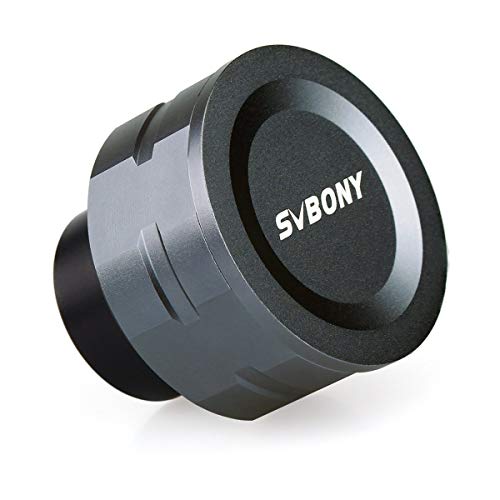
The SV105 is designed as an approachable entry point for astronomical imaging. This 1.25″ IMX307 color camera supports lunar and planetary photography and is suitable for beginners who want an easy path into astrophotography. It works as an electronic eyepiece, allowing real-time viewing on a laptop or PC. Setup is described as plug-and-play with no driver required, and it supports real-time dynamic observation with clear images. For software compatibility, Windows users can download Sharpcap Capture, while Linux users can use AstroDMx Capture, and Android users can connect via USB Camera.
Key considerations include ease of use, immediate visual feedback, and straightforward transfer of telescope views to a computer. The SV105 suits quick lunar or planetary captures and is a practical starting point for learning basic imaging workflows. Its limitations to consider are sensor size and potential needs for after-market software for advanced stacking and post-processing.
SV305C Astrophotography Camera

The SV305C is positioned as a color entry-level telescope camera with notable capabilities for planetary and lunar photography, and it is suitable for Extended/ Electronic Astronomy (EAA). It uses the IMX662 sensor with a 1/2.8” back-illuminated design and a 2.9μm pixel size, enabling enhanced light sensitivity and reduced overexposure. The camera also features low readout noise and improved red spectral performance, which helps in capturing clear planetary and moon details. Users may appreciate the balance between cost and functionality, especially for those starting in CCD-like imaging with modern CMOS sensors.
Considerations include its sensor technology, color output, and the need for compatible capture software. Users aiming for more specialized narrow-band work or deep-sky imaging may find it less suited than higher-end models, but for entry-level planetary imaging the SV305C offers accessible performance plus practical USB3 data throughput.
SV205 Astrophotography Camera
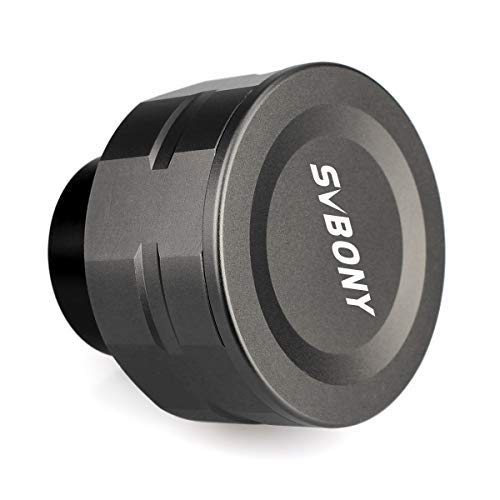
The SV205 offers a higher-resolution 7.05MP IMX415 sensor with USB3.0 connectivity, designed for beginners who want more detail in their planetary, lunar, and general astro-imaging. The camera supports real-time dynamic observation and can transmit video to a computer for sharing with others. It uses a dark-light compensation technology to improve image clarity in low-light conditions, with MJPG video up to 2K resolution. It also supports YUV uncompressed formats for flexible post-processing workflows.
Pros include higher resolution for more detailed captures and reliable performance in real-time viewing. Potential cons are larger file sizes and the need for adequate PC processing power for capturing and stacking. This model is well-suited for users who want a step up from basic imaging without moving into specialized mono or cooled cameras.
SVBONY Telescope Filter UHC Filter
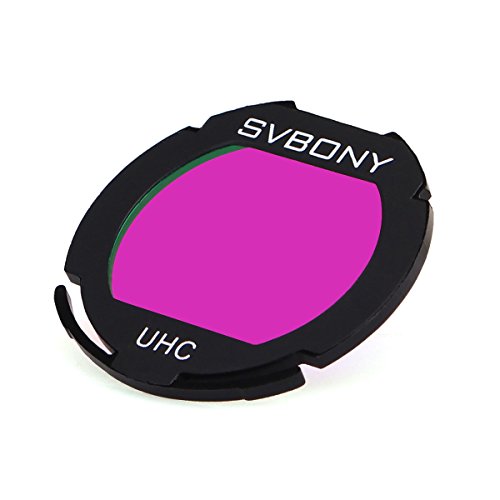
The UHC (Ultra High Contrast) filter is built for 1.25 inch setups and can be used for both celestial observations and astrophotography. It features double-sided multi-layer coatings with broadband anti-reflection properties on the back to reduce stray light, helping to minimize light pollution effects. The ultra-thin filter cell design reduces vignetting and maintains the maximum possible transmission for major emission lines. This makes it a versatile accessory for improving contrast in bright skies and when imaging emission nebulae or planets against a light-polluted background.
When integrating a filter, consider telescope aperture, sky conditions, and the spectral features you want to emphasize. The UHC filter is a practical addition for city or suburban observing and imaging sessions where light pollution impacts image quality.
Alstar 1.25 Inch Astrophotography Flip Mirror

The Alstar flip mirror is designed to facilitate precise focusing and accurate camera alignment with a telescope. It centers the object both in eyepiece and camera views, reducing the guesswork during composition. The flip mirror can be tilted to 45 degrees to bring the object into the eyepiece for precise focusing, and the included helical focuser helps make eyepiece and camera parfocal. This accessory is not a camera itself but enhances workflow for imaging by improving focus accuracy and target positioning when using a CCD or CMOS camera with a refractor or other telescope systems.
Key benefits include improved focusing accuracy, easier target alignment, and a faster imaging workflow. Potential drawbacks involve additional optical path length and requiring careful alignment to avoid back-focus issues with certain setups.
SVBONY SC311 WiFi Telescope Camera Eyepiece

The SC311 is a WiFi-enabled telescope camera that streams 1080P imagery and is designed for a simple, wireless connection setup. It is compatible with the IMX662 sensor family and features a removable UV/IR cut glass. While it excels at Moon imaging and quick captures, it requires pairing with a telescope to image beyond the Moon effectively. The onboard WiFi allows mobile devices to receive live views, which can be useful for quick previews, sharing, or educational demonstrations.
Considerations for SC311 include power supply stability, wireless range, and ensuring your telescope provides a stable mount for the camera. It is a convenient option for quick, cord-free imaging sessions, but more demanding deep-sky work will typically require a wired connection to a dedicated camera or a more capable astro-imaging setup.
AOMEKIE Digital Eyepiece
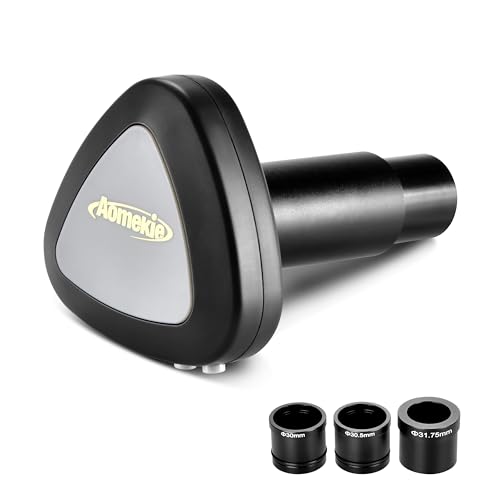
The AOMEKIE Digital Eyepiece offers 1080P FHD video recording and 2MP photos, with compatibility across various telescopes and microscopes through multiple adapter rings. It supports iOS, Android, and PC connections via WiFi, enabling real-time viewing on a laptop or phone. A built-in 800 mAh battery provides 60–90 minutes of operation on a full charge, with optional use plugged in. This device is a flexible capture option for broad educational and hobbyist uses, including astrophotography and wildlife observation.
Buying Guide: Key Purchase Considerations And Comparisons
- Sensor type and resolution: For planets and the Moon, higher resolution sensors (like the IMX415/IMX662 families) can yield more detail, but they also require adequate processing power and proper capture software. For beginners, a lower-resolution, easy-to-use camera with solid software support can be more forgiving.
- Connectivity and software: USB 3.0 connectivity and compatible capture software (Sharpcap, AstroDMx Capture) help ensure smooth data transfer and efficient processing. Wireless options (like SC311) add convenience but may introduce latency or reliability concerns in some environments.
- In-camera features vs. post-processing: Many cameras rely on stacking and post-processing to reveal faint details. Consider cameras with good live-view, low-noise performance, and compatibility with stacking tools such as RegiStax, AutoStakkert!, and DeepSkyStacker.
- System compatibility: Ensure the camera works with your telescope’s back focus and diameter (1.25″ or 2″). Accessory needs like UHC filters or flip mirrors can improve imaging under light-polluted skies or when precise focusing is challenging.
- Budget and learning curve: Entry-level cameras (SV105, SV305C, SV205) balance cost with capability and are suitable for learning framing, focusing, and stacking. More advanced cameras provide higher resolution and faster frame rates but come with steeper learning curves.
- Accessories vs. camera: Filters (UHC), flip mirrors, and eyepiece adapters often influence image quality nearly as much as the camera itself. Plan a small starter kit that enhances contrast, focusing accuracy, and alignment without overcomplicating your setup.
- Portability and power: Consider battery life for cordless setups (SC311) and the need for stable power supplies during long sessions. A dedicated power plan helps avoid interruptions during imaging runs.
- Future expansion: If you anticipate upgrading to cooled cameras, monochrome sensors, or more advanced filters, pick an ecosystem that supports easy upgrades and broad software compatibility.