Photographers rely on white balance cards to set accurate color and exposure quickly. This guide highlights top picks that deliver consistent results across digital and film workflows. Each product is evaluated for portability, durability, and ease of use, helping you choose the right card for studio shoots, field work, or travel.
| Product | Brand | Key Benefit |
|---|---|---|
| Lightdow 12 x 12 Inch Grey Card | Lightdow | Large reference surface, foldable with carrying bag |
| Anwenk Grey White Balance Card 18% | Anwenk | Compact pocket size, scratch resistant |
| Macolink White Balance 18% Card | Macolink | Durable, waterproof, matte finish |
| Genuine Whibal G7 Neutral Card | Michael Tapes Design | Industry-standard calibration, Lightroom/Photoshop compatible |
| Pixiss 4-In-1 Color Calibration Card Set | Pixiss | All-in-one set with gradient, gray, white, black cards |
Lightdow 12×12 Inch Grey Card

The Lightdow white balance reference card offers a 12 x 12 inch gray surface with an 18% reflectance and a density of 0.74. It aims to minimize exposure errors to within 1/8 of an F-stop, helping photographers achieve consistent color balance across lighting conditions. The folded design allows portable use, and the grey side provides a reliable target during color calibration. Its large surface area makes it suitable for product photography, portraits, and on-location shoots where quick, repeatable results are essential.
Anwenk Grey White Balance Card 18%
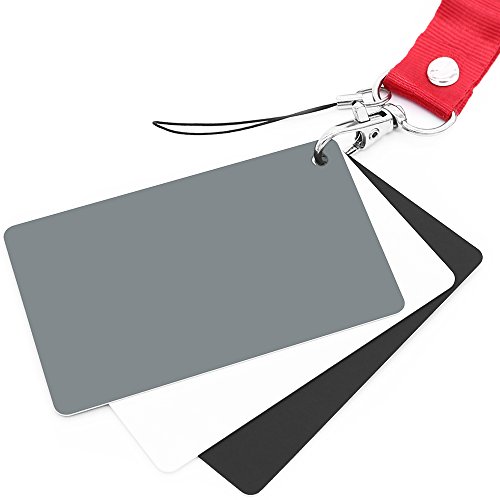
The Anwenk 18% grey card includes a matte, scratch-resistant finish with a non-reflective, waterproof surface. It is designed for seamless use with any digital camera, DSLR, video, or film workflow. The compact size—roughly 3.3 by 2.1 inches—fits in a pocket or on a keychain for quick calibration on location, making it ideal for travel photographers and journalists who need reliable color balance in varied environments.
Macolink White Balance 18% Card

The Macolink grey card is an 18% reference with a durable, matte-finish surface designed to minimize reflections. It is suitable for DSLR photography and video work, helping to establish accurate white balance quickly. The card’s water-resistant construction adds resilience for outdoor shoots, and the neutral gray tone supports consistent exposure readings across lighting conditions.
Genuine Whibal G7 Neutral Card

The Whibal G7 is a compact, certified neutral white balance pocket card designed for precise calibration. It emphasizes tight tolerances to maintain near-perfect neutrality, with strong compatibility with Adobe Photoshop and Lightroom workflows. This card is well-suited for studio work and travel assignments where consistent color management is critical.
Pixiss 4-In-1 Color Calibration Card Set

The Pixiss set combines 24-step gradient with gray, white, and black cards in one portable package. This all-in-one composition supports precise exposure control and color correction across photography and video. The cards are waterproof and durable, designed for field work, size compatibility with camera bags, and versatile use across different cameras and lighting scenarios.
Buying Guide: Key Factors To Consider
- Card size and portability: Smaller cards fit in pockets and camera bags; larger cards provide more surface for quick on-location reads, useful for product photography and studio setups.
- Finish and surface: Matte, non-reflective surfaces reduce glare and provide more reliable readings in mixed lighting. A waterproof or wipe-clean surface increases durability in rough environments.
- Color accuracy: Look for 18% grey cards or true neutral references (neutral white, black) to calibrate white balance and exposure accurately with your camera and editing software.
- Durability: Foldable designs, rigid cores, and water-resistant materials help protect the card during outdoor shoots and travel.
- Software compatibility: Some cards are accompanied by or designed to work seamlessly with Lightroom, Photoshop, or other color management tools; this can streamline post-production workflows.
- Ease of use: Pocket-sized cards offer quick calibrations, while larger cards are advantageous for studio setups that require broad reference surfaces.
- Multi-card sets: All-in-one sets (like the Pixiss 4-in-1) provide a range of references in one package, reducing the need to carry multiple items.
- Price and availability: Consider brands with consistent quality and reliable customer support, especially for frequent use in professional contexts.
When selecting a white balance card, assess your typical shooting scenarios: travel or outside shoots may benefit from compact, durable cards, while studio work might leverage larger references and broader gradients. Integrating a white balance card into your workflow helps stabilize color across lighting changes, enabling predictable results in both still photography and video.