Anyone looking to maximize their photography gear often seeks a reliable lens filter adapter set. These accessories let you use different thread-size filters on lenses with smaller diameters, helping you capture varied effects without buying new filters for every lens. Below is a curated guide to five well-regarded options, along with practical considerations to help you choose the right adapters for your kit.
| Product | Diameter Range | Key Benefit | Brand |
|---|---|---|---|
| K&F CONCEPT 18 Pieces Filter Ring Adapter Set | 37-82 mm | Comprehensive set including step-up and step-down rings; solid build | K&F CONCEPT |
| CamKix Step Up Lens Filter Adapter Rings | 37-82 mm | Multiple sizes in a single pack; user-friendly | CamKix |
| Tookie 18Pcs Filter Ring Adapter Set | 37-82 mm | Quality aviation aluminum; easy to screw on | Tookie |
| NEEWER 18 Pieces Metal Camera Lens Filter Adapter Ring Kit | 37-82 mm | Large kit with step-up and step-down rings; compatibility across brands | NEEWER |
| Haoge Lens Filter Adapter Ring for Fujifilm X100V/X100VI | 49 mm | Specific, high-quality fit for Fuji compact mirrorless cameras | Haoge |
Below are five product sections that highlight practical uses, build quality, and compatibility. Each entry includes a quick image reference and a direct link to the product page for more details.
K&F CONCEPT 18 Pieces Filter Ring Adapter Set

The K&F CONCEPT kit combines nine step-up rings with nine step-down rings, covering common diameters from 37 to 82 mm. The set emphasizes tight tolerances to minimize wobble and cross-threading, with low chemical residues for cleaner attachment. The metal construction provides durability for frequent use with various lenses and filters, making it a practical starter-to-mid-range option for photographers expanding their filter compatibility.
CamKix Step Up Lens Filter Adapter Rings

CamKix offers a nine-piece set enabling you to fit larger-diameter filters onto lenses with smaller threads. This stepped approach—from 37 mm to 82 mm—addresses common focal lengths and filter sizes. The design prioritizes ease of use, reducing the need to carry multiple individual rings, which helps streamline packing for travel or on-location shoots.
Tookie 18Pcs Filter Ring Adapter Set

Made from high-strength aviation aluminum, the Tookie set emphasizes durability and ease of use. The adapters screw directly onto the lens and convert to a broader set of filter sizes, enabling photographers to use a single filter across multiple lenses. The kit’s build aims to resist impact and maintain a secure fit during handheld shooting or on a tripod.
NEEWER 18 Pieces Metal Camera Lens Filter Adapter Ring Kit
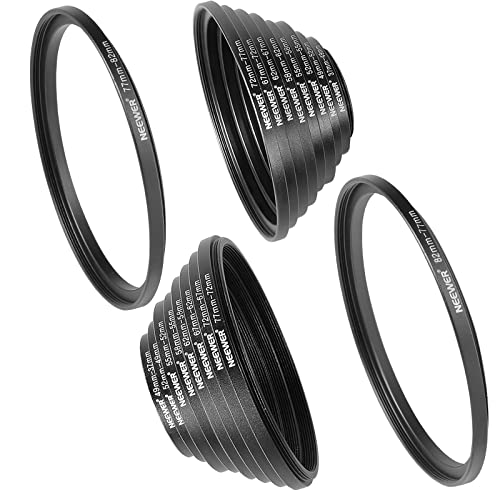
NEEWER’s kit mirrors the 37-82 mm range with nine step-up and nine step-down rings. It’s designed for broad compatibility across Canon, Nikon, Tamron, and other major DSLR systems. The metal construction and precise threading minimize wobble and misalignment, helping to preserve image quality when mounting filters, hoods, or other lens accessories.
Haoge Lens Filter Adapter Ring for Fujifilm X100V/X100VI

The Haoge adapter is a tailored option for Fujifilm’s X100V/X100VI, enabling the attachment of 49 mm filters to these compact cameras. It preserves the camera’s form factor and allows continued use of existing 49 mm filters. Note that compatibility with lens hoods and some accessories may require verification for specific setups.
Buying Guide: Key Considerations For Choosing Lens Filter Adapters
When selecting a lens filter adapter kit, consider these practical factors to ensure you get the best value and performance for your kit:
- Diameter coverage: Look for sets that span common lens diameters (e.g., 37–82 mm). A wider range reduces the need for multiple separate rings.
- Tolerance and fit: Seek rings with tight tolerances to minimize wobble and edge-crossing. Metal construction generally offers more durable threads than plastic.
- Weight and balance: Heavier rings can affect balance on lightweight lenses, especially during handheld shooting. Balance becomes more critical when using larger filters or long exposure setups.
- Material quality: Aviation-grade aluminum or brass rings provide longevity and smooth threading. Check for finish quality to resist corrosion and wear.
- Cross-brand compatibility: If you own multiple brands (Canon, Nikon, Sony, Fujifilm, etc.), verify that the kit’s thread sizes match your lenses and any filters you plan to use.
- Set completeness: A good set includes both step-up and step-down rings to maximize versatility. Consider whether you need specific pairs for your most-used lenses.
- Weight of filters and accessories: Some 2- to 3-layers nano-coated filters add weight; ensure your setup can support longer shoots without strain.
- Compatibility with non-standard cameras: For compact or smartphone setups, look for adapters designed for phone lenses or specific camera models (e.g., iPhone-specific mounts).
In practice, the best choice depends on your typical lens lineup, the filters you own, and how you travel with gear. A larger kit can be a cost-effective solution for hobbyists who frequently swap lenses, while a model tailored to a single camera system may offer cleaner integration and lighter weight for professionals.
Another factor is usability. Rings with simple, clean threading reduce the risk of cross-threading during attach/detach cycles, especially in cold weather or on location where speed matters. For those who shoot both landscapes and street scenes, having a dependable step-up option allows you to use existing filters across a range of lenses without carrying duplicate gear.
Image quality considerations aren’t limited to the rings themselves. The filters you mount (ND, CPL, UV, etc.) must align with your shooting goals. An adapter kit complements your filters by enabling those filters to work across multiple lenses, expanding your creative possibilities without a significant budget increase.