The right camera system can help families keep in touch, monitor well-being, and provide peace of mind for caregivers. Below are five top options designed with simplicity, clear displays, and reliable communication in mind. Each product emphasizes easy use, two-way talk, and hands-free monitoring to suit elderly family members who value clarity and reassurance.
Summary Table of Selected Products
| Product | Brand | Key Feature | Amazon Link |
|---|---|---|---|
| KEENLUK Home Security Camera with 4.3″ Screen | KEENLUK | 1080P HD, 4.3″ screen, one-button call | View |
| HelloBaby 6” IPS Split-Screen Monitor | HelloBaby | 6″ IPS display, long battery life, remote pan/tilt | View |
| CallToU Elderly Monitor With Camera | CallToU | 2-way talk, SOS button, night vision | View |
| SIYZHOP Indoor Home Security Camera | SIYZHOP | 4.3″ big screen, one-button calling | View |
| Sensforge 2.5K Indoor Pan-Tilt Dome | Sensforge | 2.5K, AI detection, 360° coverage | View |
KEENLUK Home Security Camera With 4.3″ Screen

KEENLUK’s camera centers on easy communication for families. It offers HD 1080P real-time video with a 4.3-inch screen that makes viewing straightforward for seniors. A one-button call feature simplifies initiating a video chat, reducing confusion for older adults who are less comfortable with smartphones. The device supports local storage via SD card and does not require a cloud subscription, which can appeal to households prioritizing privacy and simplicity. Device-to-device calling allows monitoring from another compatible unit, helping caregivers stay connected without complex setup.
HelloBaby 6” World First IPS Split-Screen Monitor
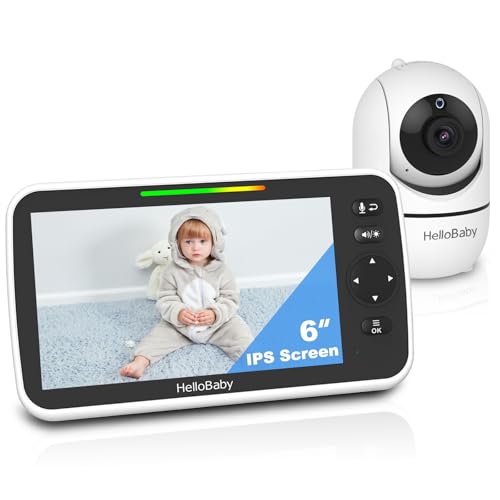
This HelloBaby model emphasizes a large 6-inch IPS display, designed to ease viewing for elderly users, with a long battery life for overnight monitoring. It supports a wide range of visibility, ensuring caregivers can check on a loved one with minimal eye strain. Features include a 3-axis viewing range and wireless operation without constant recharging. While designed primarily as a baby monitor, its large screen, long battery, and night-friendly display also suit elder care, providing an approachable interface for seniors who need to stay aware of their surroundings.
CallToU Elderly Monitor With Camera
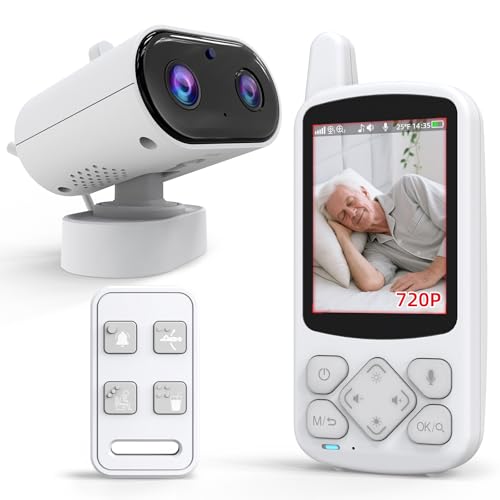
CallToU focuses on caregiver-to-elder communication with a two-way talk setup and infrared night vision. A prominent SOS button and daily alerts support quick intervention for issues like mobility changes or dehydration. Its design aligns with dementia-friendly care, offering simple prompts and reminders that can be critical for consistent routines. The system prioritizes practical alerts and clear communication without relying on complex menus, making it suitable for users who prefer straightforward interactions.
SIYZHOP Indoor 4.3-Inch Big Screen Camera

SIYZHOP pairs a 4.3-inch main screen with a one-button call feature, enabling quick intercom sessions with family members. It also supports smart reminders for routines such as meals or medications, which can assist elderly users in maintaining daily habits. The device-to-device calling option extends communication flexibility, allowing caregivers to initiate a check-in from different rooms without navigating complex menus. This model suits households seeking an affordable, user-friendly option for basic elder care monitoring and communication.
Sensforge 2.5K Indoor Pan-Tilt Dome Camera

Sensforge delivers higher-resolution 2.5K video with AI-powered detection for humans, pets, and motion. The 360-degree pan and tilt plus 90-degree vertical tilt provide broad coverage, reducing blind spots in living spaces. This model supports dual-band Wi-Fi (2.4G/5G) and includes a 64GB SD card, allowing local storage with no ongoing monthly fees. The combination of clear detail, wide coverage, and intelligent alerts makes it a strong choice for households needing reliable monitoring with minimal maintenance.
Buying Guide
Key purchase considerations for cameras aimed at elderly care:
- Ease of use: Look for large displays, simple interfaces, and one-button calls or SOS alerts to minimize confusion for older adults.
- Two-way audio: Clear, low-latency communication helps caregivers assist remotely and reduces anxiety for seniors.
- Display quality: A bright, large screen reduces eye strain and improves readability for seniors with declining vision.
- Power and network requirements: Consider whether a device relies on Wi-Fi, local storage, or cellular backups. No-subscription models are appealing for privacy and cost.
- Alerts and reminders: Systems with medication reminders, daily alerts, and fall or toilet alerts support daily routines and safety.
- Privacy and data security: Prefer devices that store data locally when possible and avoid unnecessary cloud storage.
- All-in-one versus modular: All-in-one units simplify setup, while modular kits may offer flexible placement and expansion.
- Reliability in low light: Infrared night vision helps when lighting is minimal, ensuring continuous monitoring during the night.
- Persistence of connectivity: Devices that tolerate weak or intermittent signals reduce the risk of missed notifications.
In final consideration, select a system that aligns with the senior’s comfort level, the caregiver’s ease of use, and the home environment. A simple, reliable two-way communication setup with clear visuals and essential alerts usually provides the strongest support for elderly care at home.