Choosing a reliable bag to protect your camera gear while mountain biking can be challenging. The right bag stays secure on rugged terrain, provides quick access to your camera, and shields lenses from dust and water. This guide highlights five highly capable bike frame and top-tube bags that balance storage, accessibility, and durability. Each product is evaluated for on-the-trail use, ensuring you can grab shots without slowing your ride.
| Product | Brand | Capacity | Key Benefit |
|---|---|---|---|
| WOTOW Bike Frame Storage Bag | WOTOW | 2L | Water-resistant, secure under-seat or handlebar mount |
| NDakter Bike Triangle Frame Bag (2L) | NDakter | 2L | Flexible mounting, large interior with side pockets |
| Rhinowalk Bike Top Tube Bag | Rhinowalk | 1.2L | Low-profile, durable, easy access pockets |
| Aomiker Waterproof Bike Frame Bag | Aomiker | 1.6L | Quick zipper access, heat-dissipating phone pouch |
| Lamicall Bike Frame Bag | Lamicall | 2 in.1 | 2-in-1 use, sensitive touch screen access |
Overview: The bags below were selected for their balance of weather protection, room for essential gear (like extra batteries, memory cards, filters, small tools), and unobtrusive mounting. All are compatible with common mountain bikes and allow quick camera access while riding. The goal is to minimize distraction while keeping gear safe from rain, mud, and bumps.
WOTOW Bike Frame Storage Bag
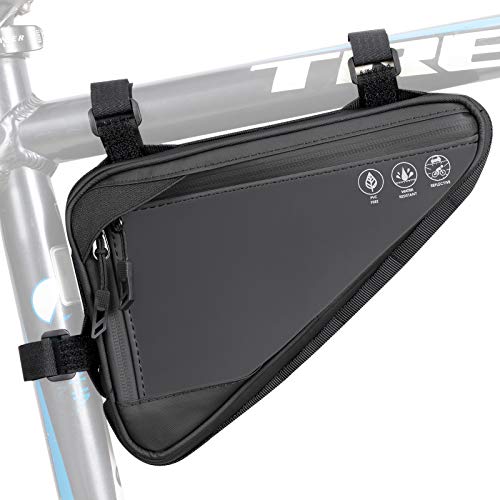
This 2L frame bag from WOTOW emphasizes durability with a 600D Oxford shell and a PU coating to resist water and abrasions. The upgraded seam-sealed zipper helps prevent rainwater entry, making it a reliable option for damp trail conditions. Its three-strap installation secures the pouch firmly under the head tube or along the frame, ensuring minimal movement during aggressive rides. A large reflective area enhances visibility during dawn or dusk rides, helping to keep you safer when navigating forest paths. The bag provides ample interior space for a compact camera or action camera, spare batteries, memory cards, a small toolkit, and other essentials—while staying slim enough to avoid knee impacts on rough stretches.
What to note: The fabric’s water resistance and the secure strap system are key strengths. If you frequently ride in wet weather or washout sections, the combination of material quality and sealing helps protect delicate gear. The downside is that you’ll want to verify the bag’s dimensions against your camera setup to ensure a snug fit, especially if you carry multiple lenses or bulkier accessories.
NDakter Bike Triangle Frame Bag (2L)

NDakter’s 2L triangle bag adopts a practical 3-in-1 concept, offering flexibility to convert between triangle frame bag and top-tube bag based on ride needs. It features a weather-resistant build with reinforced stitching and a roomy interior for compact cameras, spare batteries, memory cards, and small tools. The installation relies on Velcro straps that wrap around the frame, providing a secure hold even on rough trails. A pair of side pockets adds convenient spaces for small items you want quick access to during a ride. The thoughtful design minimizes frame interference, making it a strong choice for riders who want modular storage without sacrificing maneuverability.
Designer notes: The bag’s ability to switch configurations makes it versatile for different camera rigs and bike setups. The trade-off is that some riders may find the Velcro straps require adjustment after long rides, and ensuring a tight fit is essential to prevent shifting during bumpy sections.
Aomiker Waterproof Bike Frame Bag

Aomiker’s 1.6L frame bag emphasizes rapid access with a 1-second linkage zipper design. The bag is built with a hard shell that resists deformation and provides substantial protection for your camera gear, even on rocky descents. The pouch includes a separate internal mesh area and a TPU-fitted phone pocket to ensure easy visibility and touch control while riding—helpful for checking shots or maps without removing the bag. The heat-dissipation holes on the back improve phone performance during long sessions. Overall, this option is well-suited for riders who want both rugged protection and convenient device access on demanding trails.
Considerations: The hard-shell design adds weight, which is a factor on endurance rides. Ensure your camera setup fits within the 1.6L capacity, particularly if you carry additional lenses or larger batteries. The dedicated phone pocket is a plus for those who rely on GPS or live view while riding.
Lamicall Bike Frame Bag

The Lamicall bag is pitched as a versatile 2-in-1 solution for top tube and stem mounting. It uses a quick-install clamp system and rotation-friendly design to allow easy removal and reattachment. The bag features a sensitive touch-enabled window for quick phone checks, which helps when you’re using a phone as a shot guide or for live location tagging. The included rain cover adds an extra layer of protection, a useful feature for unpredictable mountain weather. With a compact footprint and a transparent window, the bag supports on-bikes adjustment while enabling fast retrieval of accessories or a compact camera unit when needed.
Important notes: Check your bicycle frame’s dimensions to ensure compatibility with the clamp range and the bag’s width. The touch window is best suited for slim devices, and larger cameras may require a more traditional zipper opening.
Buying Guide: Key Purchase Considerations For Mountain Biking Camera Bags
- Storage capacity: Assess how much gear you typically carry (camera body, one or two lenses, batteries, memory cards, tools). A 1.2–2L range suits most compact setups; larger setups may benefit from modular or expandable designs.
- Mounting stability: Look for bags with multi-point mounting, snug straps, and low-profile designs to minimize movement on rough trails. Under-head-tube and under-seat placements generally reduce wobble better than loose bags.
- Weather protection: Choose materials with water resistance or waterproof zippers, and consider a bag that includes a rain cover. Mud, splashes, and rain are common in mountain biking.
- Accessibility: On-trail shoots demand quick access. A bag with easy one-hand operation, a responsive touch window (for quick viewing or control on a phone), and a fast-release mechanism is valuable.
- Device compatibility: If you use a phone as a GPS or live view tool, ensure the bag’s window is compatible with your device’s size and touch sensitivity. For cameras, ensure the interior supports your lens hood and accessory shapes without being restrictive.
- Durability and weight: Hard-shell designs offer enhanced protection but add weight. Lightweight fabrics expand carry capacity while trading some protection. Consider your terrain when balancing weight and protection.
- Modularity: Some bags offer convertibility between triangle frame and top-tube configurations, which can adapt to different bikes or rides without needing extra gear.
- Maintenance: Choose bags with straightforward cleaning and drying processes since mud and dust are common on trails.
In sum, the best camera bag for mountain biking blends rugged protection with easy access. Each option listed above targets different priorities—whether prioritizing capacity, quick access, or modularity. For long trips with extra lenses, a 2L system with secure under-frame mounting typically provides reliable space and stability. If you value compactness and quick switching between configurations, a 1.2–1.6L model with convertibility can fit a camera body and essential accessories without adding bulk. Always verify compatibility with your bike frame and test the bag’s fit with your typical photography setup before hitting technical descents.