Finding the right C-mount 16mm lens can dramatically improve image sharpness, field of view, and overall versatility in creative and professional shoots. This guide highlights top options that balance optical quality, compatibility, and value for American photographers and videographers using C-mount or adapting to related mounts. Each pick is evaluated for performance, build, and practical use across CCTV, microscopy, and cine applications. Below is a quick overview of five standout choices to help you decide which lens best meets your needs.
| Product | Brand | Focal Length | Mount |
|---|---|---|---|
| Arducam C-Mount Lens for 12MP IMX477 Raspberry Pi HQ Camera | Arducam | 16mm | C-Mount |
| Rokinon 16M-C 16mm f/2.0 | Rokinon | 16mm | C-Mount |
| Fotasy 16mm C Mount Lens to Canon EF-M Mount Adapter | Fotasy | 16mm | Adapter (C-Mount Lens to EF-M) |
| Fotasy 16mm Prime Black C Mount & Nikon F Lens Adapter | Fotasy | 16mm | C-Mount to Nikon F |
| Sigma 16mm f/1.4 DC DN Contemporary (Sony E) | Sigma | 16mm | Sony E |
Arducam C-Mount Lens for 12MP IMX477 Raspberry Pi HQ Camera
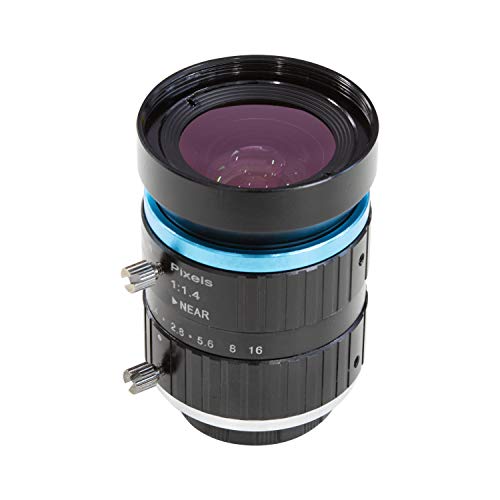
The Arducam C-Mount Lens is designed for the 12MP IMX477 Raspberry Pi HQ Camera, offering a 16mm focal length with manual focus and adjustable aperture. It provides a field of view around 44.6° (horizontal) and 33.6° (vertical), with a 24° view on standard IMX477 modules. The lens is described as a practical, “just works” option with minimal artifacts like shading or corner darkening, making it a solid choice for compact, Pi-based projects that demand consistent image quality without complex setup.
Sigma 16mm f/1.4 DC DN Contemporary Lens for Sony E
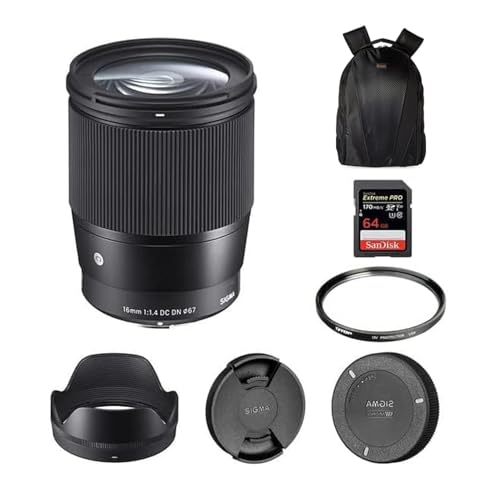
The Sigma 16mm f/1.4 DC DN Contemporary is a bright prime for Sony E-mount bodies, providing an f/1.4 aperture and a compact wide-angle option well-suited for low-light scenarios and expansive scenes. Though not a C-mount lens, it aligns with the 16mm short-wide category and is noted for high optical performance and a fast autofocus system on mirrorless platforms. Its weather-sealed build and ColorCore-inspired protection help preserve image integrity in varying environments. This lens is a strong candidate for shooters who already use Sony E and want a premium 16mm option.
Fotasy 16mm C Mount Lens to Canon EF-M Mount Adapter

This Fotasy adapter converts a 16mm C-mount lens to Canon EF-M mirrorless cameras. It supports infinity focus and explicitly notes compatibility limitations with Canon EF/EF-S DSLR bodies. The design emphasizes straightforward adaptation, enabling 16mm C-mount lenses to be used on compact Canon M-series bodies, expanding the reach of classic cine lenses for modern hybrid rigs. It is ideal for users who want to repurpose older C-mount glass on EOS M cameras without investing in a more expensive adapter system.
Fotasy 16mm Prime Black C Mount & Nikon F Lens Adapter

The Fotasy C Mount to Nikon F Adapter enables using 16mm C-mount lenses on Nikon F-mount bodies. This copper-mounted, sturdy adapter supports infinity focus and is designed for reliability in CCTV, macro, and cine workflows that rely on C-mount optics. It is a practical solution for photographers and videographers who want to extend the usability of their 16mm glass across popular Nikon DSLR and mirrorless formats, maintaining image stabilization and optical clarity where possible.
Rokinon 16M-C 16mm f/2.0 Aspherical Wide Angle

The Rokinon 16M-C is a dedicated 16mm C-mount wide-angle with an f/2.0 maximum aperture, offering a broad field of view and strong low-light performance for C-mount videography and imaging. Its large maximum aperture supports shallow depth of field and cinematic aesthetics, while the wide angle helps capture expansive scenes in tight spaces. The lens is well-suited for documentary work, surveillance, and experimental cinema that demands bright, edge-to-edge sharpness and consistent performance across frame edges.
Buying Guide: Key Considerations For C-Mount 16mm Lenses
- Mount compatibility: Verify if the lens is truly C-mount or intended for use with adapters on other mounts. Some products are adapters that extend compatibility to Canon EF-M or Nikon F bodies, while others remain native C-mount.
- Focal length and field of view: 16mm lenses deliver wide-angle perspectives. Consider the desired FOV for your subject distance and sensor size to avoid excessive distortion or cropping.
- Aperture and speed: Lenses with larger maximum apertures (e.g., f/2.0 or faster) perform better in low light and provide more creative control over depth of field. Some modern options include aspherical elements to reduce aberrations.
- Optical quality and shading: Look for coatings, edge-to-edge sharpness, and minimal vignetting. Lenses designed for cinema may offer better focus and smoothness in manual operation.
- Build and compatibility with accessories: Check build quality, weather sealing (if needed), and compatibility with adapters and matte boxes, filters, or focus gears if you run a cine rig.
- Price-to-performance balance: Native C-mount lenses tend to offer straightforward performance, while adapters can broaden usability but may introduce tolerances that affect infinity focus or alignment.
- Use-case alignment: For Pi-based projects, CCTV installations, or macro/dolly shoots, prioritize lenses with reliable infinity focus and stable mechanicals. For mirrorless bodies, consider adapters that preserve optical performance while maintaining autofocus options when available.
- Service and support: Choose brands with clear documentation, good community support, and warranty or replacement policies to ensure long-term reliability.
In summary, the listed options cover a spectrum from native C-mount lenses to practical adapters that unlock additional mounting possibilities. When choosing, assess your camera system, preferred working distance, and the level of manual control you require for focus and aperture. Each choice offers distinct advantages depending on your project type, whether you value low-light performance, cinematic rendering, or adaptability across multiple cameras.