Nighttime wildlife monitoring demands stealth, reliability, and crisp image quality. Black flash (no-glow) trail cameras minimize disturbance while delivering clear day and night footage. The following picks represent a range of features—from cellular connectivity to long-range night vision—that help you monitor wildlife, property, or security scenarios with confidence. Below, you’ll find five top contenders, each with a concise snapshot of what makes them suitable for dark-field action and rugged outdoor use.
Summary of Selected Models
| Product | Key Strength | Connectivity | Night Vision |
|---|---|---|---|
| GardePro A3S Trail Camera | 64MP photos, 1296p video | None (standalone) | No-glow infrared LEDs, up to 100 ft |
| Cuddeback CuddeLink LL-3A-1 | Stealthy no-glow, wireless network | CuddeLink wireless | No-glow 940 nm, 75 ft |
| SPYPOINT Flex-Dark Starter Pack | 40MP photos, 1080p video | Cellular (LTE) | No explicit glow color; optimized for stealth |
| Moultrie Edge 2 Cellular | 36MP photos, 1080p video | 4G LTE | Low Glow flash |
| MagicEagle Trail Camera | 2K video, AI features | Cellular (eSIM) | No-glow infrared night vision |
GardePro A3S Trail Camera (64MP, 1296p)
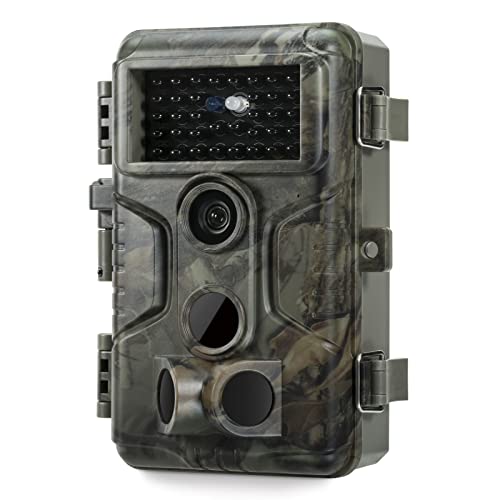
The GardePro A3S is designed for stealthy night captures with a Sony Starvis image sensor and new-generation no-glow infrared LEDs. It delivers crisp images up to 100 ft at night and records high-clarity video at 1080p or 1296p. With a fast trigger speed and waterproof construction, this camera is well-suited for wildlife monitoring and security applications in low-light environments. The enhanced 64MP image capability helps produce vivid daytime shots, while the integrated microphone captures more immersive sound for wildlife or activity analysis.
Cuddeback CuddeLink LL-3A-1

The Black Flash variant from Cuddeback emphasizes stealth with no-glow 940nm IR LEDs, supporting an invisible 75-foot illumination range. It is part of the CuddeLink wireless network, allowing links with up to 23 cameras for remote photo checks without disturbing wildlife. Power efficiency is addressed with long-lasting options, including batteries and expanded SD storage up to 256GB, enabling extended field performance with minimal maintenance. The no-glow design reduces disturbance in nocturnal settings while preserving image quality.
SPYPOINT Flex-Dark Starter Pack

The SPYPOINT Flex-Dark is a cellular trail camera that emphasizes remote monitoring with the SPYPOINT app. It delivers 40MP photos and 1080p videos with sound, enabling you to view activity in real time. Aiming for stealth, the model leverages dark aesthetics and cellular connectivity to transmit high-detail imagery to your device. The starter pack form factor includes dual-band capabilities and cloud-enabled functionality for efficient data management and quick decision-making in the field.
Moultrie Edge 2 Cellular Trail Camera

The Moultrie Edge 2 Cellular combines nationwide 4G LTE connectivity with a robust image pipeline, offering 36MP photos and 1080p HD video with audio. It emphasizes easy cellular setup, supported by USA-based customer assistance. The device is designed for year-round scouting with broad coverage and a low-glow flash option, helping to minimize disturbance while still capturing essential night-time activity. It provides a reliable option for property surveillance and advanced wildlife monitoring across large areas.
Combined, these options cover a spectrum of black-flash capabilities—from completely no-glow, stealth-oriented cameras to cellular-enabled solutions that balance covert operation with remote access. Each model presents its own balance of trigger speed, image resolution, and power management to fit different monitoring goals.
Buying Guide: Key Purchase Considerations
- Night vision style: No-glow vs low-glow. No-glow LEDs minimize visibility and disturbance but may sacrifice maximum brightness; low-glow can offer brighter night images with a slight risk of detection if someone is close to the camera.
- Trigger speed and recovery: A fast trigger speed (measured in seconds or fractions) reduces missed action. Consider how quickly the camera resets after a shot, especially for fast-moving animals.
- Resolution and video: Higher megapixels deliver crisper daytime images, while higher video resolution (e.g., 1080p, 1296p, or 2K) provides more detail for identification and analysis.
- Cellular connectivity: Cellular models enable remote viewing, alerts, and content delivery. Check coverage in your area, data plans, and whether the device supports multi-camera networks or dual-SIM options.
- Power options: Solar, rechargeable, or standard batteries. Solar charging can extend deployment, particularly in remote locations; ensure compatibility with local weather conditions.
- Storage: Larger SD cards allow longer periods between retrievals. Consider card type and class for reliability in outdoor conditions.
- Durability: Weather resistance (IP ratings), temperature tolerance, and moisture sealing affect long-term performance in rugged environments.
- Ease of use: App experiences, remote management features, and software updates impact ongoing usability and value.
- Security and privacy: Evaluate data encryption, remote wipe options, and the camera’s physical security against tampering or theft.
- Budget and value: Weigh upfront costs against ongoing data plans, battery consumption, and feature sets to determine total cost of ownership over time.
These considerations help you tailor a choice to your environment—whether you’re tracking nocturnal wildlife, monitoring property, or conducting remote surveillance. The listed models provide a variety of configurations to match stealth needs, connectivity preferences, and power strategies, ensuring you can select a black flash trail camera that best fits your application.