For filmmakers and videographers, anamorphic lenses offer distinctive cinematic visuals: oval bokeh, horizontal blue flares, and a wider aspect ratio. This guide highlights five notable anamorphic options compatible with DSLR and mirrorless systems, focusing on practical performance, build quality, and autofocus capabilities where available. Each entry includes key features to help you compare choices quickly and confidently.
| Product | Mount / Format | Key Benefit |
|---|---|---|
| SIRUI 50mm F1.8 1.33X APS-C Anamorphic Lens | E Mount (APS-C) | Widescreen look with 1.33x squeeze and lighter form |
| SIRUI 40mm T1.8 1.33X Anamorphic Lens | E Mount / S35 | Fast lens with autofocus and 2.35:1 output |
| SIRUI 24mm Anamorphic Lens F2.8 1.33X | MFT | Broader field of view and 2.4:1 look |
| SIRUI 35mm T2.9 1.6X Full-Frame Anamorphic Lens | RF / EF / etc. | Full-frame coverage and pronounced cinematic squeeze |
| Freewell Neutral Streak 1.33x Anamorphic Lens | 17mm smartphone mount (adaptable) | Natural light streaks and cinematic desqueeze options |
Note: All lenses listed are selected for their relevance to DSLR/mirrorless workflows and their ability to deliver authentic anamorphic aesthetics. Depending on your camera system, you may need adapters or specific mounts to pair these lenses with your body.
SIRUI 50mm F1.8 1.33X APS-C Anamorphic Lens for E Mount

The SIRUI 50mm F1.8 1.33X APS-C anamorphic lens is designed to deliver widescreen cinema-style imagery while remaining lightweight. It uses high-quality Schott glass elements and is built for E-mount cameras like Sony NEX and Alpha systems. Its 1.33x squeeze offers an expanded field of view, translating to a roughly 37.5mm-equivalent framing on a typical APS-C sensor. This lens targets photographers and videographers seeking a classic anamorphic aesthetic without the bulk of full-frame glass.
Key features include:
- 1.33x anamorphic squeeze for 2.4:1-like output
- Lightweight design with German-made Schott glass
- APC-style cropping on APS-C bodies yields a cinematic look
SIRUI 40mm T1.8 1.33X Anamorphic Lens

The SIRUI 40mm T1.8 1.33x anamorphic lens for E-mount Cameras (S35) offers a cinematic focal length with autofocus support. It yields a 2.35:1 aspect ratio in 16:9 shooting modes and features two flare options—blue and neutral—so operators can tailor the look to their project. Its fast T1.8 aperture helps in low light and shallow depth-of-field scenarios, making it versatile for interviews, music videos, and short films.
Key features include:
- Autofocus with an advanced STM motor
- 1.33x squeeze producing a wide cinematic frame
- Blue/neutral flare options for artistic control
SIRUI 24mm Anamorphic Lens F2.8 1.33X
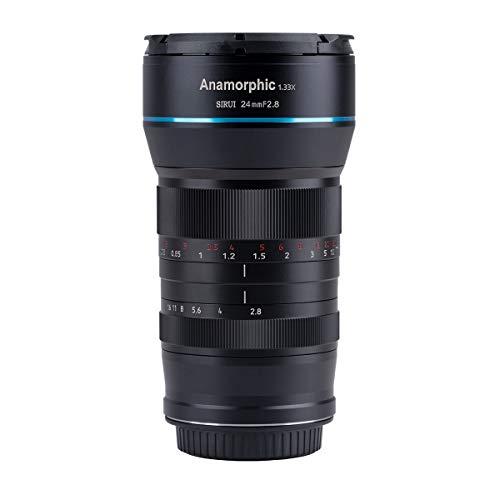
With a wider 24mm focal length, this anamorphic lens compresses the horizontal field of view by 1.33x to achieve a 2.4:1 aspect ratio. The reduced minimum focusing distance of 0.6m supports close-up work in tight environments. It’s suited for photographers who want an overtly cinematic look in stills and video, including distinctive blue light streaks and oval bokeh characteristic of anamorphic optics.
Key features include:
- 1.33x squeeze for a classic anamorphic frame
- Wider field of view on APS-C/MFT sensor ecosystems
- Distinctive blue light streaks and oval bokeh
SIRUI 35mm T2.9 1.6X Full-Frame Anamorphic Lens

This full-frame anamorphic lens from SIRUI is designed to deliver strong cinematic personality with a 1.6x squeeze factor. The lens is compatible with common RF/EF/L/Z mount families, making it adaptable across a wide range of DSLR and mirrorless cameras. When used in 3:2 sensor mode, it delivers around 2.4:1 with extra options up to 2.8:1 in 16:9 mode, offering a distinctly wide perspective with pronounced anamorphic artifacts like flares and creamy oval bokeh.
Key features include:
- Full-frame coverage for many DSLR/mirrorless bodies
- 1.6x squeeze for expansive cinematic framing
- Consistent anamorphic look across sensor modes
Freewell Neutral Streak 1.33x Anamorphic Lens

The Freewell Neutral Streak 1.33x anamorphic lens adds a classic horizontal light streak effect to footage, useful for night cityscapes and cinematic storytelling. It threads into the standard 17mm mount commonly used with smartphones and certain compact rigs, but it can also be adapted to compatible DSLR or mirrorless mounts. The lens emphasizes a true widescreen desqueeze workflow and supports consistent alignment via an integrated level gauge.
Key features include:
- 1.33x squeeze with 2.4:1 potential output
- Integrated level gauge for precise setup
- Blue-neutral flare options and desqueeze workflow
Buying decisions should consider the following factors to maximize value and results when shooting with anamorphic gear on DSLR systems.
Buying Guide: Key Considerations for Anamorphic Lenses on DSLRs
- Sensor size and mount compatibility: Identify whether your camera uses APS-C, Full-Frame, MFT, or a specific mount. Anamorphic lenses come with various squeeze factors (1.33x, 1.55x, 1.6x) and are designed for different sensor sizes. Ensure the lens will cover your camera’s sensor without vignetting.
- Focal length and field of view: Shorter focal lengths yield wider horizons and more dramatic anamorphic effects; longer focal lengths compress space and can emphasize subject separation. Match the lens to your typical shooting distance and composition needs.
- Aperture and speed: Fast T-stop numbers (e.g., T1.8) help in low light and create shallow depth of field, which is common in cinematic work. Consider whether you need speed or preferred optical characteristics at smaller apertures.
- Autofocus performance: Some modern anamorphic lenses include autofocus (not all). If you rely on AF for run-and-gun or interview work, prioritize lenses with reliable autofocus systems and subject tracking.
- Flare control and style options: Anamorphic flares contribute to the cinematic look. Some lenses offer multiple flare colors (blue, neutral), giving you creative flexibility depending on the scene and lighting.
- Build quality and weight: Cinematic lenses tend to be heavier. Assess whether the lens balance works with your camera rig, especially for handheld or gimbal work.
- Desqueeze workflow: Post-processing compatibility matters. Some lenses come with easier desqueeze workflows in popular editors, while others require third-party tools or manual flattening.
- Cost of ownership: Anamorphic lenses can be costly. Consider whether to rent, buy used, or purchase a newer, more compact option to fit your budget and filming frequency.
- Adaptability for DSLR ecosystems: If you shoot with Canon, Nikon, or Panasonic DSLRs, confirm compatibility with available adapters to maximize the use of these lenses without compromising image quality.
In practice, shooters often pair a telephoto or standard lens with an anamorphic adapter or dedicated anamorphic lens to achieve the desired aspect ratio and aesthetic. The five options presented here balance practical DSLR/mirrorless compatibility with distinctive cinematic features, from strong flares to robust optical squeeze, across a range of focal lengths and formats.