For podcasters and live streamers, the right 4K camera can elevate video quality, audio clarity, and audience engagement. This guide highlights five top 4K options that balance image sharpness, autofocus, AI tracking, and ease of use. Each choice is suitable for solo streaming, interview formats, and usability with common broadcasting software like OBS, Zoom, and Teams. Read on to compare features, specs, and practical considerations to find the best fit for your podcast workflow.
| Product | Brand | 4K Capable | Ideal For | Notable Tech |
|---|---|---|---|---|
| EMEET S600 4K Webcam | EMEET | Yes | Solo streamers, beauty/personal streams | PDAF Autofocus, Light Balance, 2 mics |
| EMEET PIXY Dual-Camera PTZ | EMEET | Yes | Product demos, teaching, multi-angle streaming | AI tracking, 310° PTZ, gesture control |
| Logitech Brio 4K Webcam | Logitech | Yes | Remote work, conferences, versatility | HDR, RightLight 3, noise-canceling mics |
| EMEET C960 4K Webcam | EMEET | Yes | Professional video calls, meetings | PDAF, dual AI mics, auto light correction |
| OBSBOT Tiny 2 Lite 4K | OBSBOT | Yes | AI tracking, classroom and meeting use | Gesture control, multiple tracking modes |
Below are five carefully chosen products, organized to help you weigh autofocus, field of view, audio integrity, and software compatibility. Each entry includes a direct link to the product page, a quick visual reference, and a concise feature context to aid decision making.
EMEET S600 4K Streaming Webcam

The S600 uses a Sony 1/2.5″ sensor to deliver high-definition 4K streaming, with options for 4K at 30FPS or 1080P at 60FPS. It includes dual noise-canceling mics and a built-in privacy cover, making it suitable for solo podcasters who need reliable image quality and clearer voice capture. PDAF autofocus and auto light balance help maintain sharpness as lighting changes. The camera supports a 73° field of view at 4K for immersive framing and 40°-73° at 1080P, allowing flexibility in desk setups and on-camera presence.
EMEET PIXY Dual-Camera AI-Powered PTZ 4K Webcam

PIXY brings a dual-camera approach to streaming, combining a main 4K imaging camera with an auxiliary AI camera for enhanced autofocus and exposure. The system aims to keep the subject centered and well-lit, with a 310° pan and 180° tilt for flexible framing. Gesture control starts with an open palm, and EMEETSTUDIO software lets you save presets and manage privacy modes. While AI tracking improves subject lock, performance may vary in tight spaces or rapid multi-person scenes, so test in your studio before live use.
Logitech Brio 4K Webcam
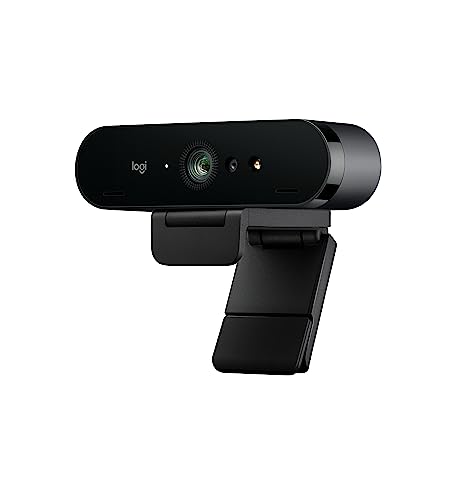
Logitech Brio is a versatile option designed for professional-grade video calls and streaming. It delivers Ultra 4K resolution with HDR-based RightLight 3 for improved exposure in varied lighting, along with 5x HD zoom. The mics are optimized for noise suppression, helping clear voice capture in busy environments. The camera integrates smoothly with work-from-anywhere workflows and device-management ecosystems, making it a strong fit for remote podcasts and multi-user setups where stable performance is essential.
4K Video Camera Camcorder Ultra HD 80MP (Suttie)

Although primarily marketed as a camcorder, this device offers strong 4K recording capabilities and a broad 18x digital zoom with a 3.0″ IPS screen and IR night vision. It includes two batteries and a 32GB card, making it well-suited for on-the-go podcasting sessions, field interviews, or b-roll capture that supplements studio broadcasts. It also supports webcam usage, enabling live streaming alongside in-camera footage for a more dynamic podcast production.
OBSBOT Tiny 2 Lite 4K Webcam

OBSBOT Tiny 2 Lite focuses on AI tracking and PTZ capabilities, offering gesture control and multiple tracking modes to keep speakers centered in frame. The device supports 4K at 30FPS and 1080P at 60FPS, with HDR and built-in mics to enhance audio clarity. Its compact footprint and tilt/track features make it a practical option for desk setups, teaching, and smaller studio environments where automated framing adds value.
Buying Guide: Key Purchase Considerations For 4K Podcast Cameras
- Resolution and frame rate: 4K at 30FPS is common for sharp video, while 1080P at 60FPS can offer smoother motion for spoken word and rapid gestures. Consider your streaming platform’s bandwidth and your editing workflow.
- Autofocus and exposure: PDAF and AI-based tracking help maintain sharp focus as you move or change lighting. Look for models with auto light correction or HDR to handle mixed lighting in home studios.
- Field of view and framing flexibility: A wider FOV can capture more background or participants, but may distort edges at 4K. PTZ and adjustable FOV options offer creative control for solo hosts, interviews, and multi-person layouts.
- Audio quality: Built-in mics with noise suppression are beneficial, but many podcasters prefer external mics routed through a mixer or audio interface for superior sound. Check mic quality and software-based noise reduction options.
- Software compatibility: Ensure the camera works well with your primary broadcasting and conferencing tools (OBS, Zoom, Teams, Google Meet). Look for vendor software or universal driver support for easy integration.
- Privacy and security: Built-in privacy covers or hardware switches help protect privacy between sessions. Regular firmware updates can address security and performance issues.
- Portability and setup: If you record on location, battery life (for camcorders) and tripod compatibility can influence your choice. A stable tripod and a simple mounting interface are valuable for consistent framing.
- Budget and value: Higher-end 4K webcams deliver robust performance, but mid-range options often strike a better balance for hobbyist podcasters. Consider total cost of ownership, including accessories and software.
When evaluating these options, align each camera’s strengths with your podcast format. Solo hosts benefit from reliable autofocus and audio clarity, while interview setups may prioritize multi-angle capabilities and PTZ features. For on-the-go or educational content, AI tracking and gesture controls can reduce manual camera adjustments.
In summary, the five highlighted cameras offer a spectrum of capabilities, from compact 4K webcams with strong built-in audio to advanced AI-powered PTZ systems. Your final choice should reflect your recording environment, preferred workflow, and how much you value automated framing versus manual control.