Exploring the best 24mm wide angle lenses helps photographers capture expansive scenes with sharp detail, deep depth of field, and beautiful foreground interest. This guide compares prime and zoom options across popular brands, highlighting performance, size, and specialty features that matter for landscapes, architecture, and astrophotography. Whether you shoot with Sony, Canon, Nikon, or mirrorless systems, these selections provide strong choices for wide-angle versatility.
| Product | Brand | Focal Length | Mount | Main Strength |
|---|---|---|---|---|
| Sony E-mount FE 24mm F1.4 GM | Sony | 24mm | FE | Exceptional sharpness and creamy bokeh |
| Canon EF-S 24mm f/2.8 STM | Canon | 24mm | EF-S | Ultra-compact classic for APS-C |
| Sony FE 12-24mm F4 G | Sony | 12-24mm | FE | Extremely wide range with constant aperture |
| Nikon NIKKOR Z 14-24mm f/2.8 S | Nikon | 14-24mm | Z | Ultra-wide, fast aperture, landscape versatility |
| Samyang 24mm F1.8 AF for Sony E | Samyang | 24mm | Sony E | Lightweight and affordable full-frame option |
The following sections spotlight five top 24mm options, describing design goals, image quality, autofocus behavior, and how they fit different shooting styles. Each product section includes a clickable link to its Amazon listing, a visual reference, and feature-oriented notes to help you compare at a glance.
Sony E-mount FE 24mm F1.4 GM
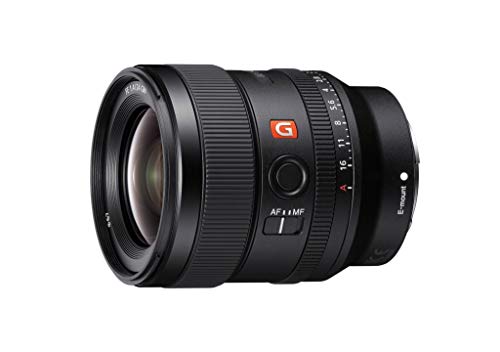
The Sony FE 24mm F1.4 GM is a compact prime designed for full-frame Sony E-mount cameras. Its maximum aperture of F1.4 enables extraordinary low-light performance and depth of field control, while the G Master design promises high-resolution sharpness across the frame with smooth background separation. This lens suits landscape photographers who demand edge-to-edge clarity and pleasing bokeh for foreground interest or astrophotography with wide-open stars. Autofocus is fast and quiet, making it reliable for video as well as stills.
Canon EF-S 24mm f/2.8 STM

Canon’s EF-S 24mm f/2.8 STM offers a compact, lightweight solution for APS-C Canon DSLR shooters. With an effective focal length around 38mm on full-frame, it provides a natural perspective for street scenes, interiors, and travel photography. The slim design makes it a convenient travel lens, and the STM motor ensures smooth autofocus, which is beneficial for video work. The wide 24mm field of view is ideal for capturing more expansive scenes without stepping back too far.
Sony FE 12-24mm F4 G Wide-Angle Zoom

The Sony FE 12-24mm F4 G is a versatile ultra-wide zoom with a constant F4 aperture for consistent exposure and depth of field. The lens features a G design with multiple aspherical and specialized elements to deliver sharp corners and rich color rendition across its entire zoom range. It is a strong choice for sweeping landscape panoramas, architectural interiors, and night sky photography where a flexible focal range helps frame dramatic compositions without frequent lens changes.
Nikon NIKKOR Z 14-24mm f/2.8 S

Nikon’s NIKKOR Z 14-24mm f/2.8 S delivers a professional-wide experience with a fast constant aperture, allowing dramatic vistas, architecture, and interiors to come alive with minimal exposure changes. The lens is optimized for edge-to-edge sharpness and robust contrast, making it a staple for landscape, cityscape, and astro photography on Nikon Z cameras. Its versatile zoom range simplifies framing large scenes without stepping back, while the f/2.8 aperture supports enhanced performance in low light.
Samyang 24mm F1.8 AF for Sony E

Samyang’s 24mm F1.8 AF for Sony E offers a bright, compact option with automatic focus and a lightweight build suitable for travel and everyday shooting. With a wide 83.7° angle of view on full-frame Sony E cameras, it pairs a fast F1.8 aperture with nine-blade bokeh to produce smooth background blur. The silent STM-like focus performance reduces focus breathing for video, creating clean transitions in both stills and motion work. This makes it a practical budget-conscious choice for Sony mirrorless shooters.
Buying Guide: Key Considerations For Your 24mm Wide Angle Lens
When choosing a 24mm wide angle lens, consider sensor size, system compatibility, intended subjects, and how you plan to shoot. These factors influence perceived focal length, field of view, distortion, weight, and handling. The following perspectives help readers compare options across primes and zooms:
- Resolution and sharpness: Prime lenses like the Sony FE 24mm F1.4 GM tend to deliver superior center-to-edge sharpness and contrast when stopped down, which is essential for landscape and architecture. If you prioritize maximum resolution, a GM or premium G lens is a strong fit.
- Low-light and depth of field: Fast apertures (f/1.4 to f/2.8) offer brighter performance in dusk or dawn scenes and yield shallower depth of field for selective focus. Prime options excel in this area, but high-quality zooms with constant apertures provide flexible framing without sacrificing exposure consistency.
- Weight and portability: For travel and handheld work, compact primes (Canon EF-S 24mm f/2.8) or lightweight zooms (Samyang for Sony) reduce fatigue and enable longer shooting sessions. Consider your bag space and daily carry weight.
- Autofocus and video performance: Look for models with fast, accurate AF, quiet operation, and minimal focus breathing for video work. The Samyang AF variant specifically targets Sony E users with silent focus for smooth footage.
- Sensor compatibility and field of view: On APS-C bodies (Canon EF-S), the 24mm lens behaves like a ~38mm equivalent; on full-frame systems, it remains 24mm. This matters for framing and composition depending on your camera body.
- Distortion and image quality across the frame: Most ultra-wide lenses exhibit some distortion at the extremes. Premium zooms and modern primes manage this with coatings and specialized elements to keep lines straight while preserving color and contrast.
Choosing between a prime and a zoom can depend on your workflow. Primes generally offer maximum image quality and faster apertures but require more repositioning. Zooms give flexibility for dynamic scenes, time-lapse sequencing, and variable compositions, especially useful in landscapes and architecture where you want to experiment with framing on the fly.